
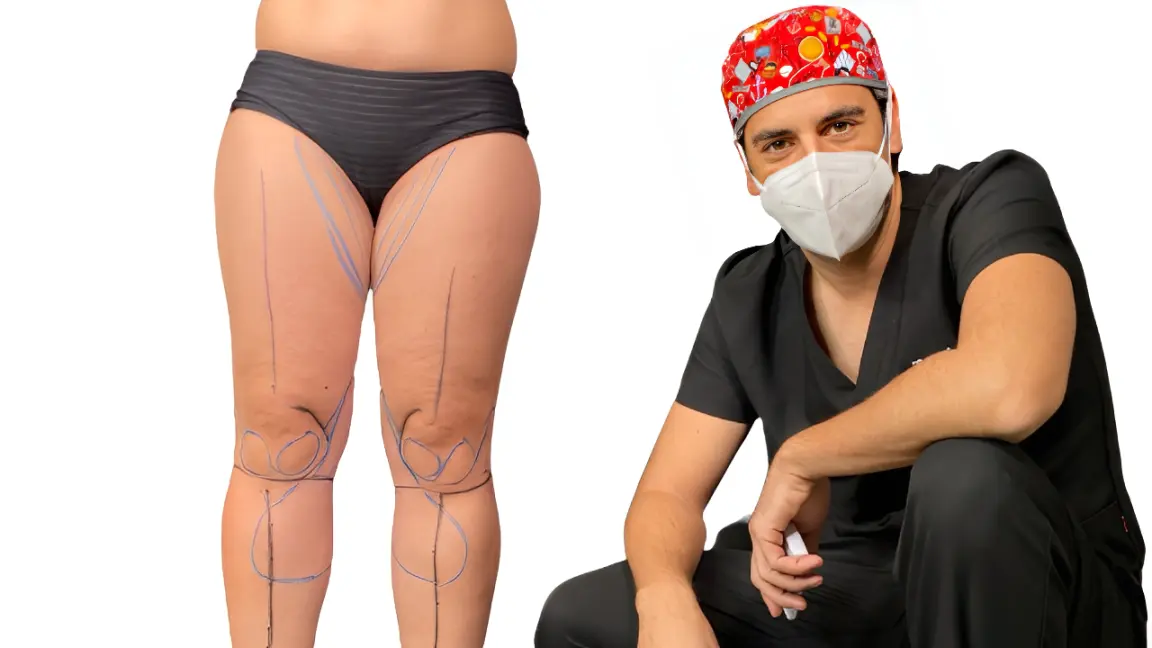
Lipedema is a little-known disease, even among medical professionals, and I’m sure those of you reading this article can confirm that this is the case. You’ve probably had to visit several doctors to finally get a diagnosis, and they’ve told you to lose weight, exercise more, or that your thick legs are due to genetics or poor circulation. That’s happened to you, right? Many others don’t even have a diagnosis and wonder if they have lipedema.
That is why LipedemaAC is here to explain the most relevant aspects of lipedema, also known as lipoedema. It is a progressive disease of the fatty tissue characterised by a pathological accumulation of fat predominantly in the lower extremities, i.e. the legs (from the hips to the ankles), but it also affects the upper extremities (arms). Lipedema does not affect the hands or feet and is symmetrical, unlike lymphedema, which usually affects one side of the body.
This results in unbalanced silhouettes, thin bodies in many cases with thick legs, and no matter how much dieting and exercise is done, the legs do not lose volume or lose very little. In addition, the fat is often painful and causes discomfort, which is why lipedema is also known as ‘painful fat syndrome’. Let’s now look at the causes and symptoms of lipedema.
CAUSES OF LIPEDEMA
It has been proven that there is a genetic component, as well as a hormonal component, given that it often begins or intensifies coinciding with a change in hormone levels (puberty, pregnancy, menopause, taking the contraceptive pill, etc.), but there are still no definitive studies on the causes of lipedema. Possible causes:
- Genetics: To date, there is some evidence of a genetic predisposition, as between 15 and 64% of patients have a family history of lipedema.
- Age: It usually appears during puberty and worsens with pregnancy or menopause.
- Obesity: Obesity and hypothyroidism are aggravating factors for lipedema.
SYMPTOMS OF LIPEDEMA
Patients may experience the following symptoms of lipedema:
- Hypersensitivity, pain in soft tissues both at rest and when walking or touching them.
- Feeling of heaviness, fatigue, tingling.
- Accumulation of lipedema fat, from the waist to the knees or ankles.
- Frequent bruising without any recollection of its origin.
- Emotional distress due to lack of knowledge about the disease and consequent delay in diagnosis.
If you have any of these symptoms, you can contact us by email at hola@accirugiaplastica.com or by calling +34 665 027 006. We will provide you with information and put our multidisciplinary team at your disposal. As we said, it is very common to confuse it with obesity or even cellulite, but they are different, and we are going to explain the main differences so that you can use these arguments with medical professionals who do not know how to distinguish between them.
LIPEDEMA VS CELLULITE
Cellulite can occur in patients with thin, normal or thick legs. Cellulite has the characteristic appearance of ‘orange peel skin’. What best distinguishes lipedema from cellulite is the characteristic disproportionate distribution of subcutaneous fatty tissue in very specific areas such as the thighs, ankles and legs, which is not necessarily accompanied by obesity or cellulite.
LIPEDEMA VS OBESITY
If we stop to look at the difference between lipedema and obesity, we find that obesity has different signs in terms of fat. In obesity, fat is distributed proportionally throughout the body, which is not the case with lipedema, which, as we have said before, tends to be concentrated in specific areas of the human body. Lipedema also tends to cause pain, whereas obesity does not. The main treatment for obesity is a healthy diet and regular exercise. Lipedema requires a different type of treatment, as it does not respond significantly to conventional diet or exercise.
