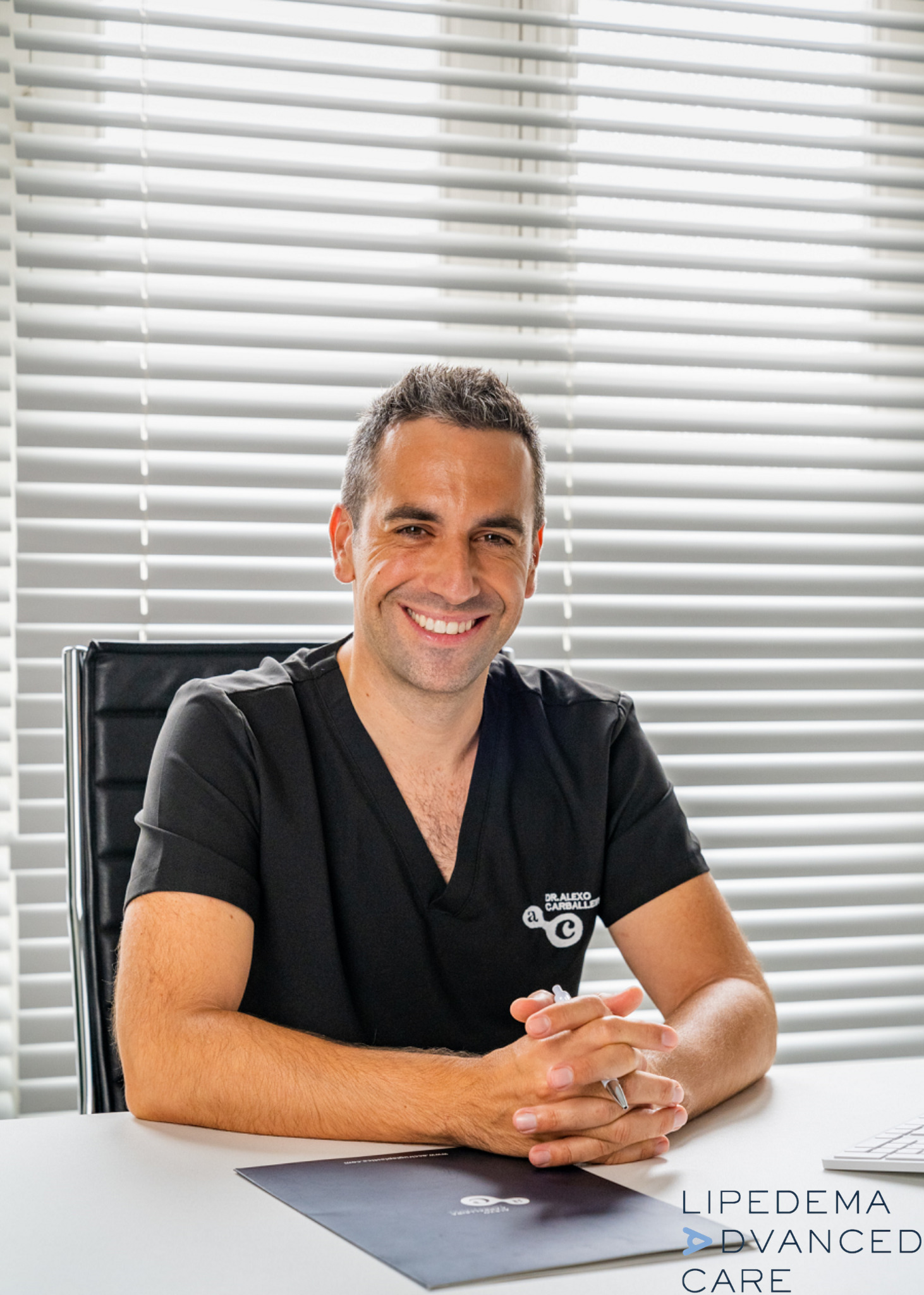
Plastic surgery and vascular surgery working on the same case, in the same assessment. This is not a surgeon who also operates on lipedema: it is a clinic dedicated to lipedema, where both of the specialties that decide a lipedema case are on the team.
Lipedema is diagnosed clinically, and it is frequently confused with three other things: lymphoedema, venous insufficiency or simply being overweight. Telling it apart properly requires examining the tissue with a surgeon's judgement and, in addition, knowing the state of the venous system. Those are two different ways of looking at the same leg.
In most centres those two assessments happen in separate circuits, weeks or months apart, with the risk that neither has the full picture. Here they happen within the same process:
| Specialty | What it contributes in lipedema | Who |
|---|---|---|
| Plastic surgery | Examination of the tissue, diagnostic confirmation, surgical indication and planning by area with lymphatic-sparing technique. | Dr Carballeira |
| Angiology and vascular surgery | Venous study with duplex ultrasound: rules out varicose veins, venous insufficiency or the after-effects of thrombosis, all of which change the diagnosis and the planning. | Dr Marta Zaplana |
That division of labour is not an organisational detail. In our study of 969 participants, the specialty that signed off the most lipedema diagnoses in Spain was precisely vascular surgery: 50.4%.
Full credentials, career history and publications for each are on their own profile page.
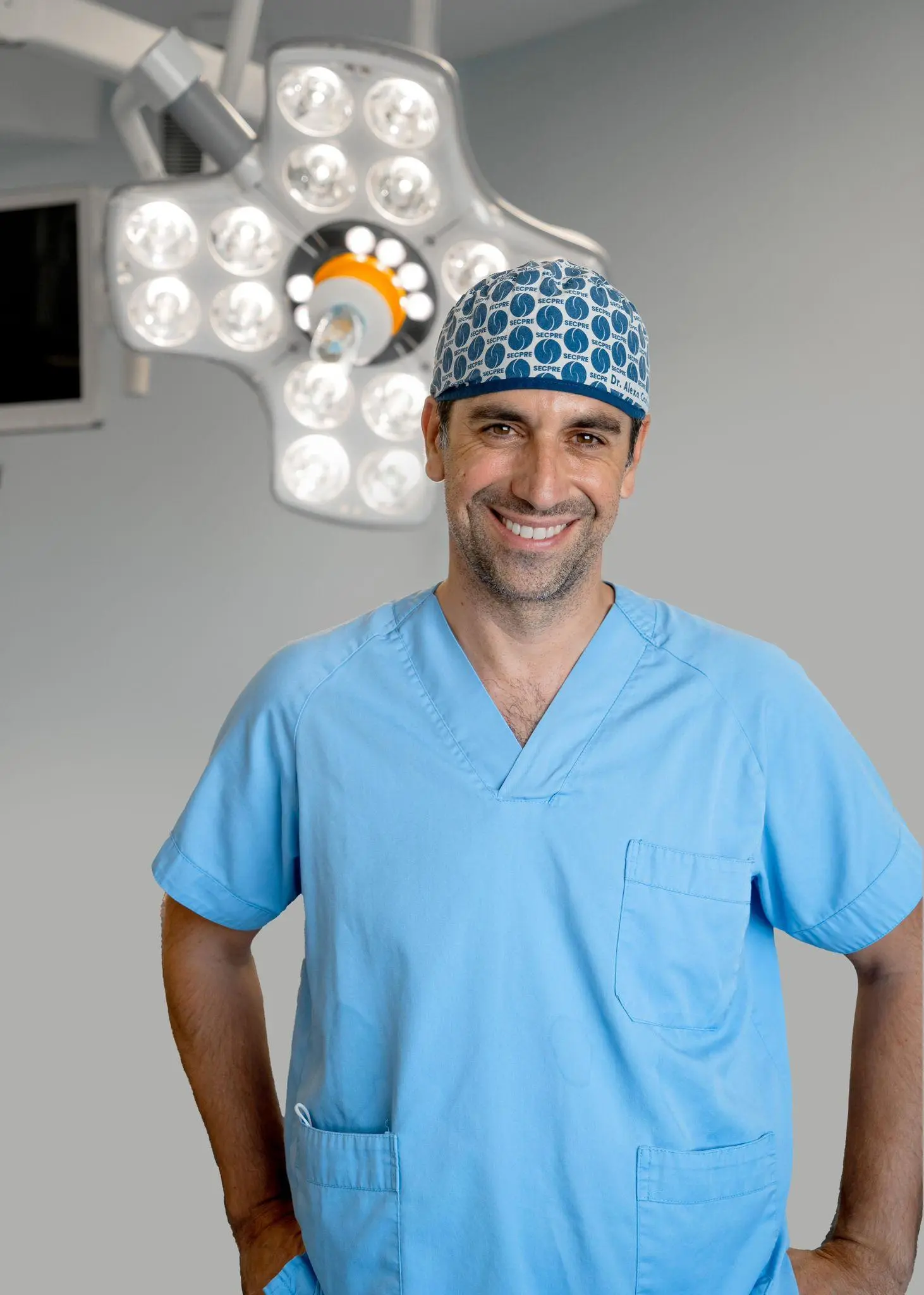
Leads the diagnosis and the surgery. His work centres on lymphatic reconstruction and the management of large-volume extraction, which is what separates lipedema surgery from cosmetic liposuction.
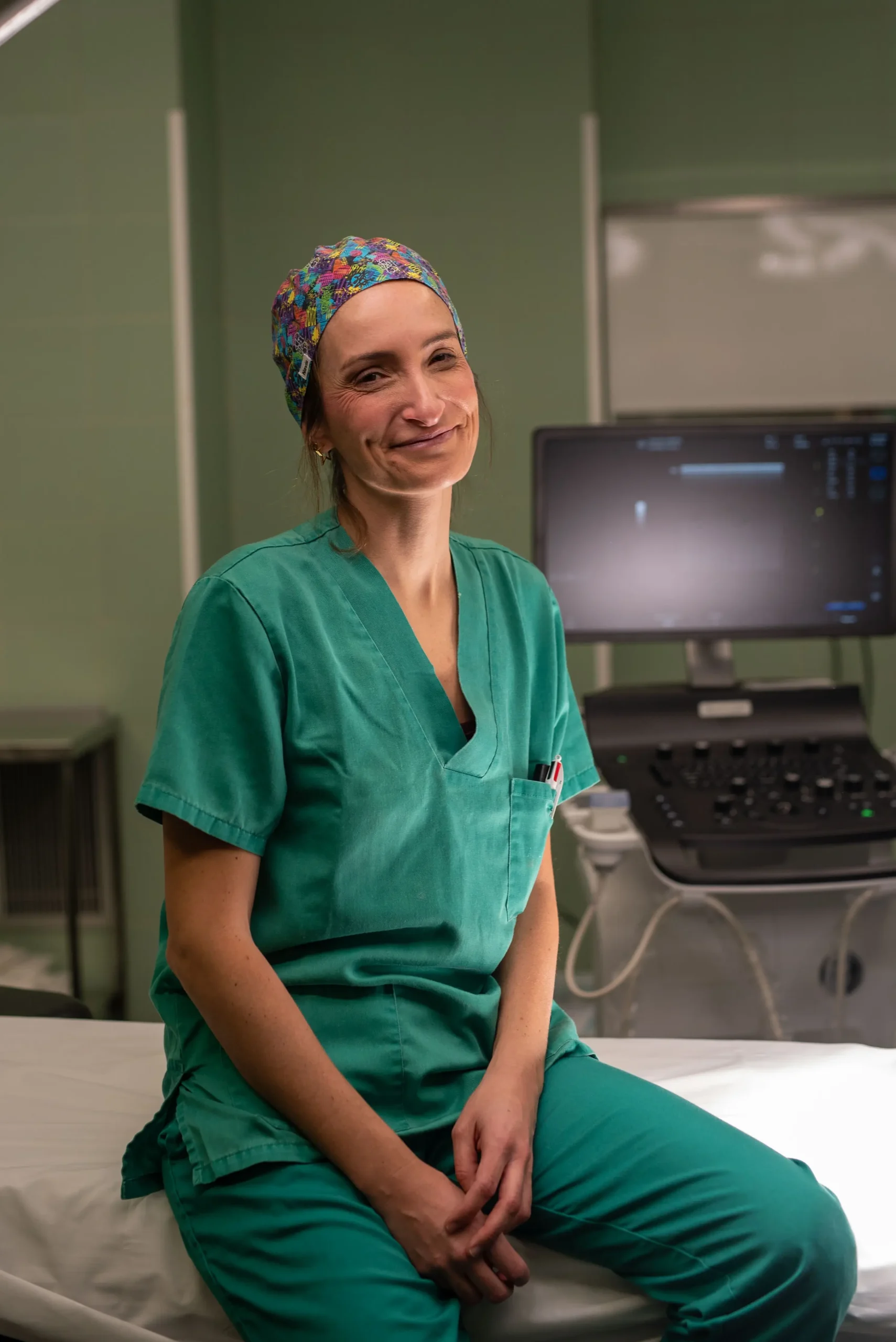
Carries out the vascular study with duplex ultrasound and monitors perfusion during surgery. She is the element that makes it possible to rule out venous disease before an operation is indicated.
Rather than telling you how good we are, we tell you exactly what happens from the moment you book. You can judge from that.
Clinical history and examination with Dr Carballeira, vascular study with duplex ultrasound by Dr Zaplana, 3D body scan and body indices. All within the same trip, because splitting it across three appointments adds nothing and complicates matters for anyone travelling in.
Both specialties assess the same case. If the vascular study finds something, it changes the planning before a surgical plan exists, not afterwards. And if the diagnosis is not lipedema, we say so: ruling it out is part of the job.
You leave knowing whether you have lipedema, at what stage and type, the state of your vascular system and what options you have, from conservative management to surgery if indicated. If there is surgery, the quote is provided in writing.
The 3D scanner allows change to be compared with numbers rather than impressions, and without resorting to before-and-after photographs. Reviews are scheduled and the recovery has its own protocol.
What you will not find here: no patient testimonials, no before-and-after galleries, no published price lists. The first two are regulated in Spanish healthcare advertising, and the last would mean inventing a figure without having seen your case. We would rather you judged us on the credentials and the process.
Almost all the information about lipedema circulating in Spanish comes from elsewhere, and very few clinics in Spain have published data of their own. In 2023 we published The Advanced Care Study in the International Journal of Environmental Research and Public Health: a descriptive cross-sectional study of 969 participants with lipedema in Spain.
The existence of research behind us does not guarantee a surgical outcome, and we do not present it as such. What it does indicate is the rigour with which the diagnosis and the indication are approached, which is exactly what determines whether an operation is well planned. You can read the full study.
If you are comparing clinics across countries, Spanish acronyms tell you very little. These are the ones above, what each one is, and how much weight it deserves:
| Credential | What it is | Why it matters |
|---|---|---|
| MIR specialist | Spain's official specialty training route: competitive national exam followed by years of hospital residency. | It is the recognised path to practise a medical specialty in Spain. Roughly equivalent to a UK specialty training programme or a US residency. |
| SECPRE | Spanish Society of Plastic, Reconstructive and Aesthetic Surgery: the scientific society of the specialty. | Full membership requires proving the specialty qualification. It is not a paid subscription. |
| SECPRE recertification | A further step: the society periodically reviews the surgeon's activity and continuing education. | It is the closest thing to an external audit that exists in this sector in Spain, and the listing is public and searchable. |
| SEACV | Spanish Society of Angiology and Vascular Surgery. | Its Vascular Diagnosis Chapter certifies specific competence in tests such as duplex ultrasound. |
| Colegio de Médicos | Registration with a provincial medical council, mandatory to practise medicine in Spain. | The equivalent of GMC registration in the UK or a state medical licence in the US. The councils run public search tools. |
| ORCID and PubMed | Researcher identifier and the public database of medical literature. | These are the two anchors that work in any country: you can check in one minute whether a doctor publishes, and what. |
No credential guarantees a surgical outcome, and we do not present them as doing so. What they do is narrow down who is trained and audited to do what they say they do.
Choosing who operates on your lipedema is an important decision, and there are signals you can check yourself without taking any website's word for it, including this one:
And one almost nobody asks: what happens if the diagnosis is not lipedema. A team that only operates on lipedema has an obvious incentive to find it. The honest answer is that in a proportion of assessments it is not, and saying so is part of the job.
An angiologist and vascular surgeon, a plastic surgeon or other specialties can diagnose it, always with specific experience in lipedema. That experience matters more than the particular specialty. In our study of 969 participants, 50.4% were diagnosed by a vascular surgeon.
Because lipedema is confused with lymphoedema, venous insufficiency or being overweight, and telling it apart requires examining the tissue and also assessing the venous system. Those are two different assessments, and here they happen in the same process rather than in separate circuits.
Dr Carballeira, plastic surgeon recertified by the SECPRE and full member of the SECPRE and the SCPRECVA. The prior vascular study is carried out by Dr Marta Zaplana Córdoba, angiologist and vascular surgeon on the team.
Yes. Both are registered medical specialists practising in Spain, and Dr Carballeira appears in the SECPRE's official list of recertified surgeons, which is public and searchable.
Yes. Dr Carballeira is lead author of The Advanced Care Study, published in 2023 in the International Journal of Environmental Research and Public Health and indexed in PubMed, on 969 participants with lipedema in Spain.
In Valencia, Spain, on Gran Vía del Marqués del Turia, 20. Consultations are by appointment, Monday to Friday. Valencia has an international airport with direct connections to most of Europe.
Yes, and it is common. The diagnostic assessment has to be in person, because it relies on the physical examination and the duplex ultrasound. What can be resolved beforehand by phone or video is whether your case fits and what to expect, so the trip is worthwhile.
Consultations are held in Spanish and English. If you prefer another language, let us know when booking so we can organise it.
You will be told, and pointed towards where it does belong. Ruling out is part of the diagnostic work: distinguishing lipedema from lymphoedema, venous insufficiency or other causes of increased volume is precisely what justifies the joint approach.