
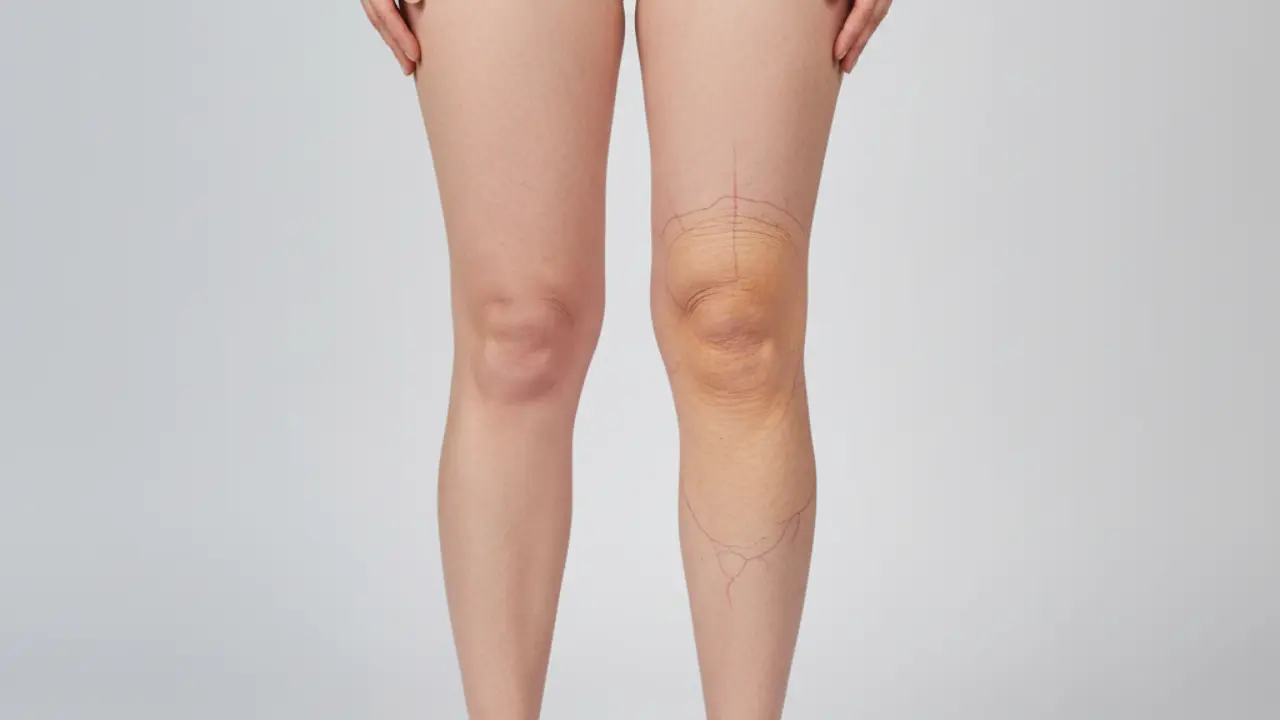
Sentir las piernas, tobillos y pies hinchados es una experiencia común que se suele asociar a la retención de líquidos o edema. A menudo, esta hinchazón se descarta como una molestia benigna causada por el calor, el sedentarismo o una dieta alta en sal. Sin embargo, para muchas personas, esta hinchazón no es un edema común, sino un síntoma inicial y confuso de una patología crónica e incomprendida: el Lipedema.
Este artículo le ayudará a comprender las diferencias cruciales para que pueda identificar sus síntomas del Lipedema correctamente y encontrar el camino hacia una solución definitiva.
¿Qué es el edema? Una breve explicación para entender la retención de líquidos
El edema, o retención de líquidos, es la hinchazón causada por el exceso de líquido atrapado en los tejidos blandos del cuerpo. Fisiológicamente, ocurre cuando un desequilibrio de fuerzas provoca una fuga de líquido desde los pequeños vasos sanguíneos (capilares) hacia el espacio intersticial (el espacio entre las células). Este desequilibrio puede deberse a:- Aumento de la presión dentro de los vasos (presión hidrostática): Como en la insuficiencia venosa crónica o el sedentarismo.
- Falta de proteínas en la sangre (presión oncótica baja): Como en la cirrosis hepática o el síndrome nefrótico.
- Obstrucción del drenaje linfático (linfedema): El sistema linfático, encargado de eliminar el exceso de líquido, está dañado.
- Inflamación o daño capilar: Por infecciones, quemaduras o reacciones alérgicas.
El error más común: confundir lipedema con edema o celulitis
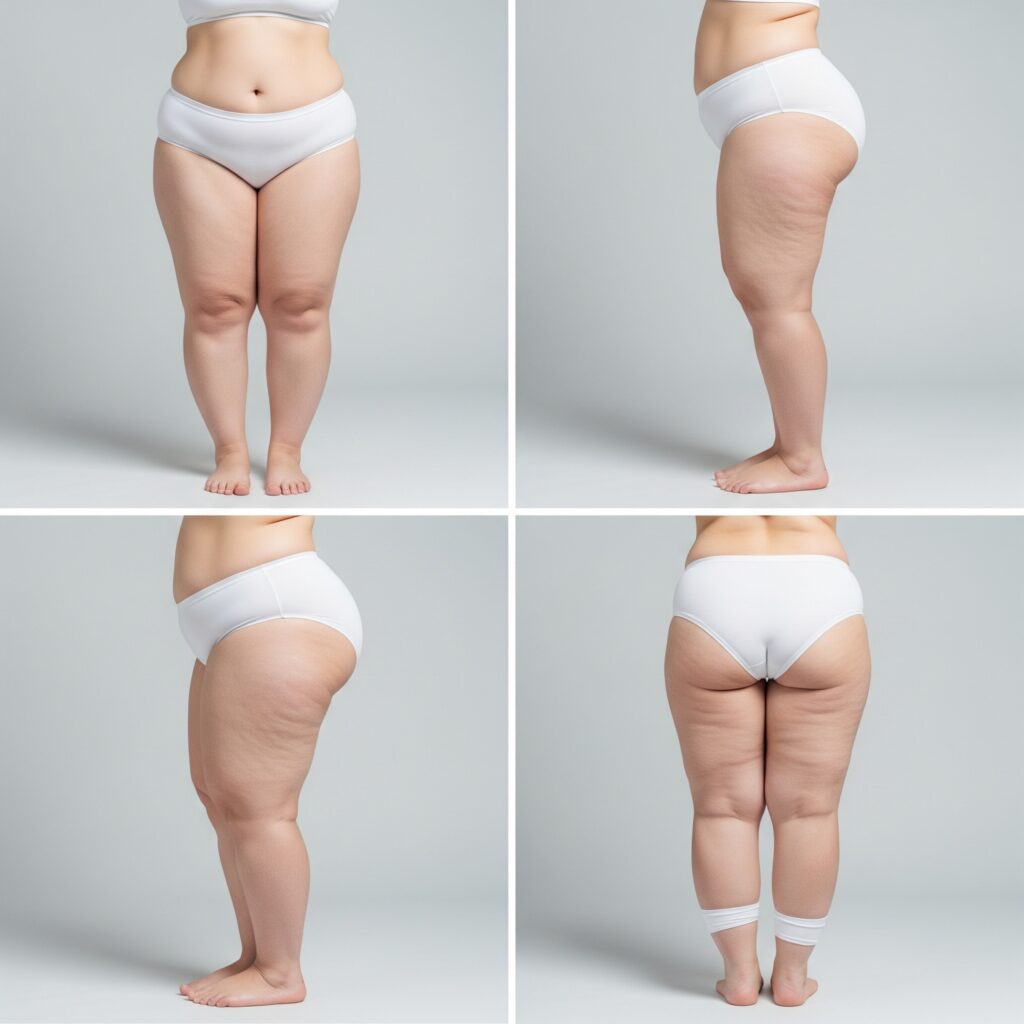
El lipedema es una enfermedad crónica y progresiva del tejido adiposo que afecta casi exclusivamente a mujeres. Se caracteriza por una acumulación anormal y desproporcionada de grasa en las extremidades inferiores (y a veces en los brazos). La confusión entre lipedema, edema y celulitis es el mayor obstáculo para obtener un diagnóstico del Lipedema correcto. Esto se debe a que el lipedema, al no ser solo grasa, causa con frecuencia hinchazón y dolor. El desconocimiento lleva a un peregrinaje médico frustrante para las pacientes, que a menudo reciben diagnósticos erróneos de obesidad o de retención de líquidos. Si se le ha diagnosticado un Índice de Masa Corporal (IMC) alto, pero el problema persiste en las piernas, es vital realizar una correcta diferenciación.7 diferencias clave para distinguir el lipedema del edema común
Aquí le presentamos las diferencias más importantes que le permitirán comprender la verdadera naturaleza de su hinchazón.1. Dolor: El lipedema duele, el edema no siempre
El edema común suele ser indoloro, a excepción de una sensación de pesadez o tensión. En cambio, una de las características más distintivas del lipedema es el dolor espontáneo al tacto o a la presión. La grasa del lipedema es extremadamente sensible, y las pacientes a menudo experimentan dolor, pesadez y sensación de ardor sin una causa aparente.2. Distribución de la grasa: Simétrica en lipedema, variable en edema
El edema común (debido a causas sistémicas como problemas cardíacos o renales) suele manifestarse de forma simétrica en ambas piernas. Sin embargo, el lipedema se distingue por una distribución de la grasa igualmente simétrica y desproporcionada, a menudo con un “anillo de grasa” sobre las rodillas o los tobillos y una clara diferencia entre la parte superior del cuerpo y las extremidades inferiores. La grasa del lipedema termina abruptamente en los tobillos o las muñecas, dejando los pies y las manos intactos. Esta distribución es clave para el diagnóstico del Lipedema y la Clasificación del Lipedema por tipos.
3. El signo de la fóvea: Una prueba sencilla en casa
El signo de la fóvea (o signo de Godet) es un indicador de la retención de líquidos. Si presiona la zona hinchada con el dedo y queda un hoyuelo que tarda en desaparecer, significa que hay un exceso de líquido. Este signo es muy común en los edemas benignos y en el edema causado por insuficiencia venosa o problemas de corazón. En el caso del lipedema, este signo es negativo o se presenta muy levemente en las primeras etapas, a menos que el lipedema haya evolucionado a un lipolinfedema, donde el daño linfático ya es significativo.4. El efecto de la dieta y el ejercicio: Diferente respuesta en ambas condiciones
El edema leve causado por el exceso de sal o el sedentarismo suele mejorar con la dieta y el ejercicio. Sin embargo, la grasa del lipedema es resistente a la dieta y al ejercicio convencional. Aunque la paciente pierda peso en el tronco y la parte superior del cuerpo, la grasa en las extremidades persiste, e incluso puede seguir acumulándose.5. Afectación de pies y manos: El lipedema los respeta
Una pista crucial para diferenciar el lipedema de otras formas de hinchazón es que la grasa del lipedema no afecta a los pies ni a las manos. Si la hinchazón afecta a los pies y los dedos, es muy probable que se trate de un edema común, un linfedema o una enfermedad sistémica (como la enfermedad renal).6. Textura de la piel: “Piel de naranja” dolorosa en lipedema
La piel con edema común puede verse estirada y brillante. La piel con lipedema, en cambio, tiene una textura distintiva similar a una “piel de naranja” o “colchón” debido a la proliferación de células adiposas. Esta piel a menudo tiene la consistencia de pequeñas bolitas o nódulos palpables, y al tacto puede sentirse fría.7. Rigidez: Edema vs. lipedema avanzado
El edema crónico no tratado puede causar rigidez en las articulaciones. Sin embargo, el lipedema también puede provocar una menor flexibilidad y movilidad en las articulaciones, especialmente en los tobillos, debido al aumento de volumen de la grasa enferma. La rigidez y dificultad para caminar son complicaciones en ambas condiciones si no se tratan adecuadamente.¿Qué hago si sospecho que tengo lipedema? Da el primer paso hacia la solución
Si la descripción del lipedema le resulta familiar, es posible que el problema no sea una simple retención de líquidos, sino una enfermedad que requiere un diagnóstico y tratamiento especializados. Si aún tienes preguntas sobre el Lipedema, nuestro equipo puede resolverlas. En Lipedema Advanced Care somos la única clínica en Valencia dedicada exclusivamente a esta patología. Nuestro equipo, con una profunda experiencia en el tratamiento del lipedema con técnicas de vanguardia como la liposucción WAL (Water-Assisted Liposuction) y la liposucción VASER, puede ofrecerle el diagnóstico preciso que necesita. Para evaluar el riesgo, además del Índice de Masa Corporal (IMC), empleamos indicadores como el Índice cintura‑altura (ICA) y el Índice Cintura Cadera (ICC). No pierda más tiempo ni dinero en tratamientos que no funcionan. El primer paso para su bienestar es agendar una consulta con nosotros para una evaluación completa.
