Manual lymphatic drainage (MLD) for lipedema
Manual lymphatic drainage (MLD) is a gentle, precise physiotherapy technique that stimulates the lymphatic system to reduce swelling, ease heaviness and prepare and recover the tissues around surgery. It is a key part of the conservative management of lipedema and of peri-surgical care, although it does not cure the condition.
What manual lymphatic drainage is
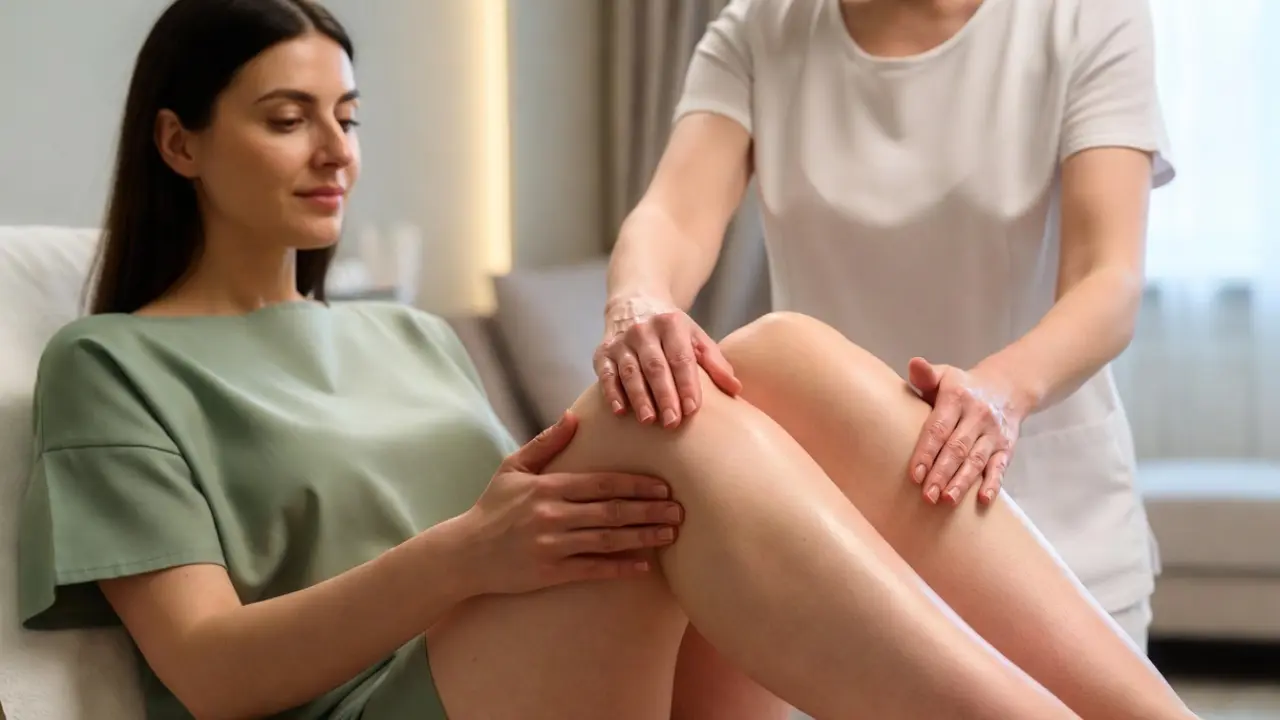
Manual lymphatic drainage (MLD) is a physiotherapy technique based on gentle, slow, rhythmic manual movements that follow the path of the lymphatic system. Its aim is to help move lymph towards areas where drainage works better, reducing fluid retention and the feeling of heaviness.
How does it work?
Unlike a conventional massage, MLD works very superficially and precisely so as not to collapse the lymphatic vessels. It is performed by a physiotherapist with specific training, adapting the pressure and sequence to your tissue and area.
Why MLD matters in lipedema
Lipedema can involve a lymphatic component, especially in advanced stages (lipo-lymphoedema). MLD does not remove the diseased fat tissue, but it does help to control symptoms such as swelling, tightness and heaviness, and improves the condition of the tissues.
It is a central tool of conservative treatment and of care before and after surgery, within the Advanced Care Method.
MLD or pressotherapy: what is the difference
They are often confused, but they are not the same. Pressotherapy is a useful complement; MLD is a manual, individualised technique of a different scope.
| Aspect | Pressotherapy | Manual lymphatic drainage (MLD) |
|---|---|---|
| Mechanism | Sequential mechanical pressure via sleeves | Gentle, specific manual movements |
| What it moves | Mainly fluid | Fluid and lymph components, stimulating the lymphatic system |
| Personalisation | Standard programme | Adapted by the physiotherapist to your tissue and area |
| Role in lipedema | Complement | Central part of conservative and peri-surgical management |
Both can be combined. Neither cures lipedema: they are part of an integrated, individualised approach.
MLD before and after surgery
Before surgery (pre-operative)
It prepares the tissues and improves their baseline condition, which supports a safer procedure and a more orderly recovery.
After surgery (post-operative)
It is one of the tools to manage swelling and prevent fibrosis while the tissues adapt. It is combined with compression and medical follow-up; we detail it in lipedema surgery recovery.
- Compression: maintains the result of the drainage.
- Movement and habits: reinforce lymphatic circulation.
- Medical follow-up: adjusts the plan to your progress.
MLD within the lipedema treatment
MLD is not an isolated treatment or an alternative to surgery: it is one part of the integrated approach. Its role, frequency and combination with compression, exercise and, where appropriate, surgery are decided individually. Discover the integrated treatment and the Advanced Care Method.
Questions about manual lymphatic drainage
What is manual lymphatic drainage?
It is a physiotherapy technique with gentle manual movements that stimulate the lymphatic system to move lymph and reduce fluid retention and heaviness.
Does MLD cure lipedema?
No. Lipedema is a chronic condition and has no cure. MLD helps control symptoms and care for the tissues, but it does not remove the diseased fat tissue.
What is the difference between MLD and pressotherapy?
MLD is a manual, individualised technique that stimulates the lymphatic system; pressotherapy applies sequential mechanical pressure. They can be combined, but they are not equivalent.
When is MLD recommended?
In the conservative management of lipedema and, above all, before and after surgery, to prepare the tissues and help control swelling.
How often should it be done?
It depends on each case and the moment (conservative or peri-surgical). The schedule is defined by the team on an individual basis.
Does it replace surgery?
No. MLD controls symptoms but does not remove the diseased fat tissue; when indicated, surgery is the way to reduce it. See the lipedema surgery.
Can poor technique make lipedema worse?
Inadequate pressure can be counterproductive; that is why MLD should be performed by a physiotherapist with specific training in lipedema.