
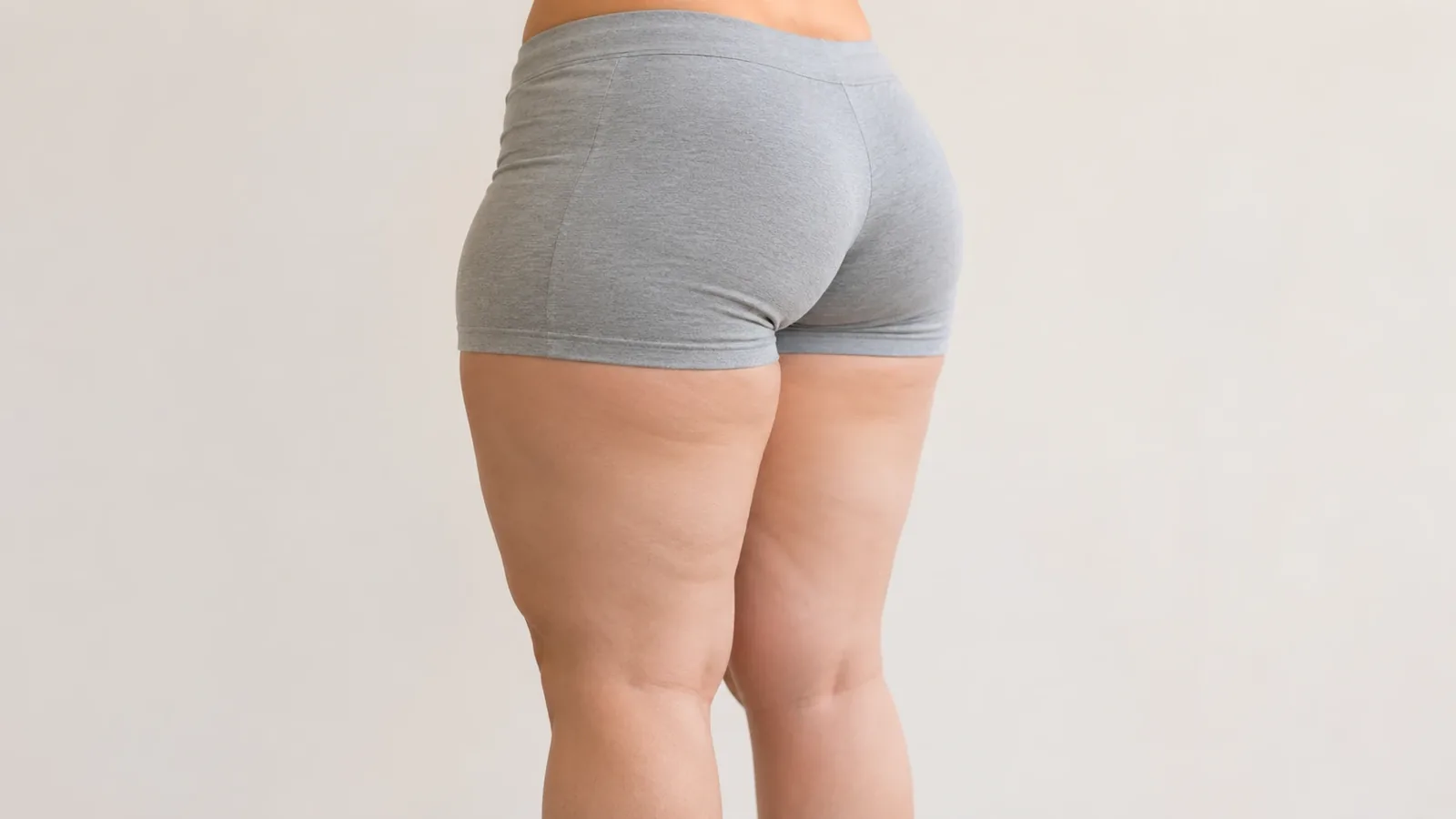
Lipedema in the thighs shows up as a symmetrical, disproportionate increase in volume in the hips and thighs, sometimes down to the knees, together with pain or tenderness on pressure and a feeling of heaviness or tightness. It is not simply «localized fat»: what sets it apart is the pain, the symmetry and the pattern, not just the size.
But neither the mirror nor the tape measure is enough. The S2k clinical guideline (2024) defines lipedema as a painful, disproportionate and symmetrical disorder of fat distribution in the limbs, and the diagnosis is clinical. This guide helps you recognize the pattern in the thighs, tell it apart from what looks like it, and know when to see a doctor. If you first want to see the whole pattern, start with what lipedema looks like.
If what worries you is a specific lump on the thigh, start with fatty lumps on the legs; and if it is pain that feels muscular, start with why your legs hurt.
What lipedema in the thighs looks and feels like
It is recognized by what you see and what you feel, both at once:
| Feature | What you see | What you feel |
Volume | Hips and thighs with more volume than the waist and torso | Heaviness or tightness in the legs; many women notice it more toward the end of the day |
Symmetry | Both thighs are affected equally | Pain or tenderness on both sides |
Knees | The volume can reach the knees, sometimes with buildup above or below the joint | Skin irritation from thighs rubbing together, in the most marked cases |
Skin and touch | Variable look: smooth, with undulations or with lobes of tissue | Pain on pressure and touch, and sometimes pain without touching |
Pain is the key: according to the S2k guideline, lipedema is always painful. A symmetrical disproportion of the hips and thighs that does not hurt is called lipohypertrophy and falls outside its definition; even so, if you notice it, bring it up at a consultation. More in lipedema symptoms.
About leg swelling during the day and bruising, which many women report, there are important nuances that we explain in what lipedema looks like and in bruising on the legs without an injury. If the swelling is new, increasing or affects the feet, have it checked.
Which areas it covers: from the hips to the knees
Classifications by area describe where the fat builds up, not how severe it is. In the legs, the pattern can stay in the hips and buttocks (type I), extend from the hips to the knees (type II) or continue to the ankle (type III); and it can add the arms. The S2k guideline itself notes that the numbering differs between authors and should be read as descriptive.
The thighs are therefore one of the areas where it appears, along with the arms, the knees and the calves. If you want to see the maps by area and the stages with our illustrations, they are in stages and types of lipedema.
What changes in daily life when the thighs are affected
Beyond the look, what usually weighs most is everyday life: heaviness and pain on pressure, and rubbing between the thighs, which can irritate the skin. According to the S2k guideline, when the fat increase is especially marked, complications can appear such as changes in knee alignment or skin lesions from skin-on-skin friction.
The guideline also notes that lipedema is often accompanied by emotional strain and difficulty accepting one's own body. That is part of the disease and deserves attention; it is not a matter of «seeing it differently».
Is it lipedema or something else?
Fuller thighs have many explanations. These are the ones most often confused with lipedema in this area:
| Condition | What sets it apart | Where to read on |
Lipohypertrophy | Same symmetrical disproportion, but painless | |
A specific lump | A localized nodule, not a symmetrical increase in volume. A new, hard or growing lump should be seen by a doctor: do not assume it is fat | |
Muscle pain | Pain that appears with effort or when moving the leg, not only when pressing on the tissue | |
Lymphedema | Swelling from fluid, often on one side only, that usually reaches the foot |
Cellulite and obesity are also confused with lipedema, but they are told apart the same way as in the rest of the leg: difference between lipedema and cellulite and why legs can be thick with a slim body.
When thighs usually start to change
It is common for the thighs and hips to change during times of hormonal change: the S2k guideline notes that the onset or worsening of symptoms almost always coincides with puberty, after pregnancies or around menopause. It is usually noticed in stages, not overnight, and not every change in the thighs in those phases is lipedema. More in is lipedema genetic and in the general causes of lipedema.
What is examined in the thighs at the consultation
There is no single test. The professional asks about the pain and its history, looks at how the volume is distributed and at the symmetry, palpates the tissue to assess tenderness and checks whether the feet are spared. Lab tests are used to rule out other causes, not to prove lipedema (S2k guideline, Recommendations 2.12 and 2.16).
Checks on the thighs before you see a doctor
They help you decide whether an assessment is worth it. They are not a diagnosis. For the general checks of the whole body, see lipedema symptoms:
Press gently on the outer and inner side of the thigh and compare them with another area, such as the abdomen. Does it hurt more than expected?
Look at your clothes: are your top and bottom sizes very different, without your weight explaining it?
Notice the rubbing: does the skin between the thighs or on the inner side of the knees get irritated?
Note the heaviness: does it always show up in the same areas and at the same times?
Write down since when you have noticed it and whether it changed with puberty, a pregnancy or menopause. Bringing it written down saves time at the consultation.
If several answers are yes, take the lipedema test and request an assessment.
Can lipedema in the thighs be treated?
Lipedema is a chronic disease and has no cure, but treatment aims to relieve symptoms and improve function. It starts with conservative management (compression, manual lymphatic drainage, exercise and habits) and, in some cases, surgery is considered. According to the S2k guideline, the indication for liposuction is assessed by pain that does not improve with conservative treatment and by complications (mobility, skin, joints), and not by the stage or the look of the thigh (Recommendations 12.2 and 12.3).
A practical tip in the meantime: avoid short-term and restrictive diets on your own. The S2k guideline recommends changing habits lastingly (Recommendation 10.6). You will find the full picture in lipedema treatment, and details on compression, exercises and lipedema surgery.
When to see a doctor
Request an assessment, calmly, if you notice a symmetrical increase in the hips and thighs with pain on pressure, heaviness that keeps coming back, rubbing that irritates the skin or symptoms that interfere with your daily life. It is not an emergency, and an assessment helps you stop trying things that do not fit.

Seek urgent medical care if a single leg swells suddenly, especially with calf pain, or if the skin of a leg turns red, hot and painful with fever or chills. If you also have shortness of breath or chest pain, call emergency services. These are not typical of lipedema and can occur on top of it.
If you would rather we look at it together, our team works with patients who travel from abroad and examines your thighs together with your medical history; if it is not lipedema, we will tell you. You can write to us through the clinic's contact form and meet the medical team before deciding anything. How the diagnosis is reached is in the guide to lipedema diagnosis.
Frequently asked questions about lipedema in the thighs
How do I know if I have lipedema in my thighs?
Check whether both thighs are affected equally, whether the hips and thighs carry more volume than the torso and, above all, whether they hurt on pressure. If they match, request an assessment: the diagnosis is clinical. You can get a first idea with the lipedema test.
Does lipedema in the thighs always hurt?
According to the S2k guideline, lipedema is always painful, although the intensity is experienced very differently from one woman to another. If there is symmetrical disproportion but no pain, it is called lipohypertrophy; even so, it is worth discussing it at a consultation.
Can lipedema affect only the thighs?
Yes. Some patterns stay in the hips and buttocks or reach down to the knees, and others continue to the ankle or include the arms. How far it goes does not measure how severe it is: classifications by area are descriptive.
Why is only one of my thighs swollen?
If it swelled suddenly, or it is red, hot and painful, seek urgent medical care. Otherwise, remember that lipedema is symmetrical: a marked difference between one side and the other is not what you would expect and deserves assessment.
Can you slim the thighs with lipedema through exercise or diet?
Exercise and nutrition are part of managing lipedema and help with weight, mobility and symptoms, but lipedema is a chronic disease and has no cure. The tissue in lipedema is classically described as resistant to dieting; that is why the S2k guideline recommends avoiding short-term diets and changing habits lastingly. More in exercises for lipedema.
Does bruising on the thighs mean lipedema?
Not by itself. Bruising is frequently reported in lipedema, but the S2k guideline does not consider it a decisive diagnostic criterion, and it has many other causes. We go through them in bruising on the legs without an injury.
Sources and references
Guideline S2k Lipoedema, AWMF 037-012, version 5.0 (2024). Recommendations 1.1, 2.3, 2.4, 2.12, 2.16, 10.6, 12.2 and 12.3; table 1 (location and typing); sections 1.6 (hormones) and 2.2.2 (symptoms, complications and emotional strain).
Content prepared by the medical team at Lipedema Advanced Care based on the S2k clinical guideline on lipedema (AWMF 037-012, 2024 version) and the sources cited.
Published in November 2026.
This page is for general information and does not replace a medical consultation. The diagnosis of lipedema is clinical and must be made by an experienced professional. The images are for reference and do not represent any real patient.

