PAL liposuction for lipedema
PAL liposuction (Power-Assisted Liposuction) uses a cannula with micro-vibration that enables efficient, even removal of fat, and is especially useful in the fibrous tissue of lipedema. Here we explain how it works, when it is chosen over WAL, how it preserves the lymphatic system and what recovery is like.
What PAL liposuction is
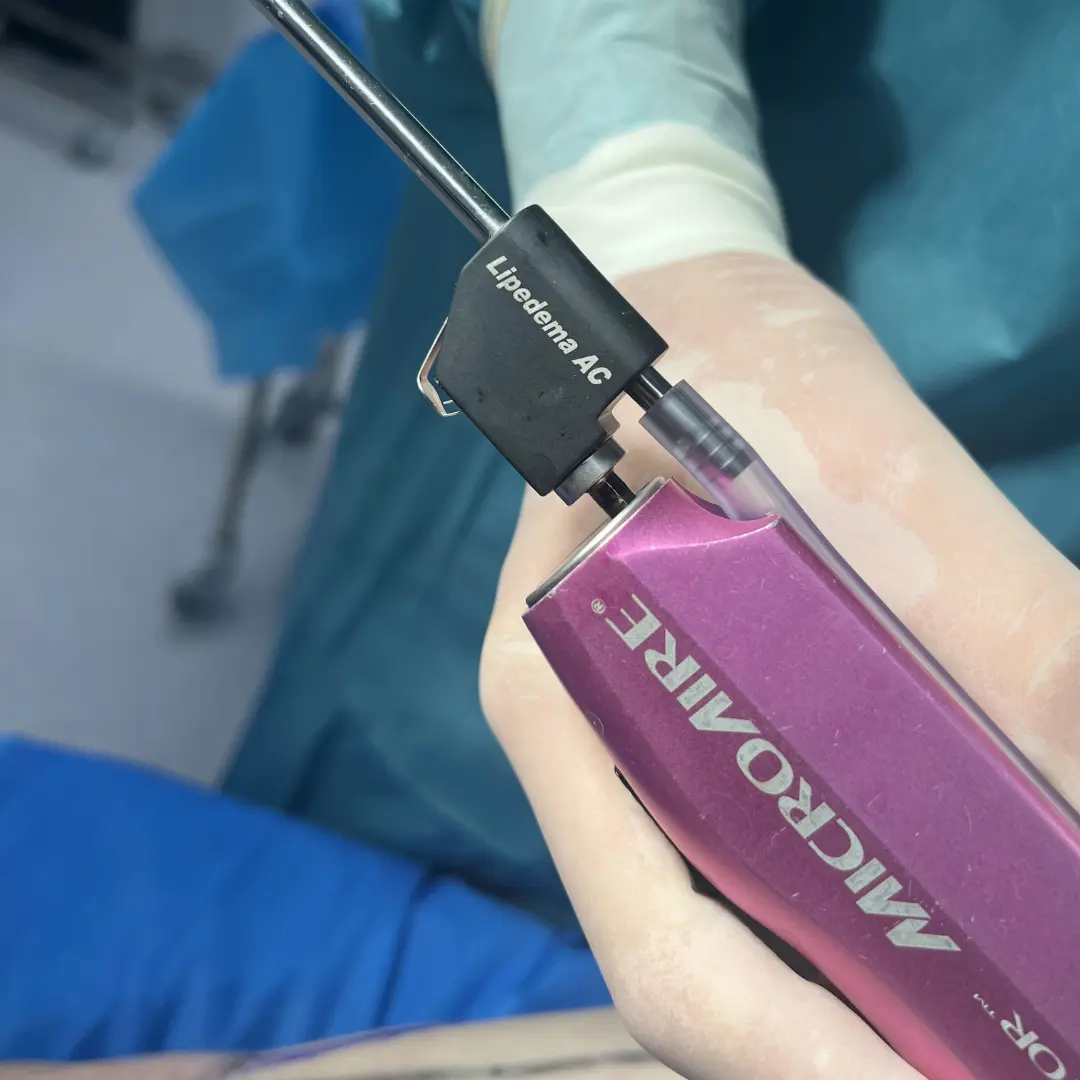
PAL stands for Power-Assisted Liposuction. The cannula vibrates at high frequency (Microaire-type systems) and releases the fat with less effort, making it possible to treat large areas more evenly and in a more controlled way.
In lipedema this is especially valuable: the tissue is often fibrous and dense, hard to treat with conventional techniques. PAL is part of our lipedema surgery, within the Advanced Care Method.
Why PAL is useful in lipedema tissue
Fibrous tissue
Advanced lipedema develops fibrosis: the fat becomes harder and more nodular. The micro-vibration of PAL works this tissue better than a traditional cannula, with more uniform extraction.
Large volumes with control
By releasing the fat with less manual force, it allows large areas (legs, arms) to be treated while maintaining control and reducing tissue trauma.
Lymphatic preservation
As with any technique in lipedema, its real value depends on performing it while preserving the lymphatic channels; that is why the team matters, not just the technology.
PAL, WAL, VASER or traditional: which and when
No technique is "the best" for everything. This comparison includes the variable that is almost never compared and which is decisive in lipedema: preservation of the lymphatic system.
| Technique | How it works | Best for | Lymphatic preservation | Typical recovery |
|---|---|---|---|---|
| PAL (vibration) | Vibrating cannula, power-assisted | Fibrous tissue and large areas | High with a specialised team | Even, moderate |
| WAL (water) | Pressurised saline jet that releases the fat | Large volumes with a gentle approach | High: respects vessels and lymphatics | Usually associated with less bruising |
| VASER / UAL (ultrasound) | Ultrasound that liquefies fat before aspiration | Dense fibrosis and definition | Variable: heat requires careful technique | Moderate |
| Tumescent / traditional | Infiltration and manual aspiration with a cannula | Small volumes, cosmetic use | Less specific control over lymphatics | Variable |
PAL and WAL are often combined in the same surgery depending on the tissue and the area. Medical, individualised decision.
PAL or WAL for my case?
The real question for someone who already knows they have lipedema is not "which technique exists" but "which one for my area and stage". This is the logic we follow:
- Very fibrous tissue or advanced stages: PAL usually provides more effective extraction.
- Large volumes with priority on lymphatic gentleness: WAL fits as the base.
- Most cases: a combination of both, with Renuvion® if there is laxity.
The final choice is always medical and individualised after the assessment.
PAL within the Advanced Care Method
PAL is not an isolated act: it is part of a protocol coordinated by the same team.
- Prior diagnosis: clinical assessment, 3D scan and vascular study with Doppler ultrasound.
- Surgery: extraction with PAL, combined with WAL and, if there is laxity, with Renuvion®.
- Recovery: compression, lymphatic drainage and follow-up during recovery.
Discover the full Advanced Care Method and how the lipedema surgery works step by step.
Recovery, step by step
Recovery is gradual and is part of the result. We break it down by phases (compression, lymphatic drainage and medical follow-up) in lipedema surgery recovery.
Questions about PAL liposuction
What does PAL mean?
Power-Assisted Liposuction: power-assisted liposuction, with a cannula that vibrates at high frequency.
How is PAL different from traditional liposuction?
PAL releases the fat with micro-vibration, allowing more efficient and even extraction, especially in fibrous tissue.
Is PAL useful in lipedema?
Yes, especially in the fibrous tissue and large volumes typical of lipedema, always within lymph-preserving medical surgery.
When is PAL recommended over WAL?
PAL stands out in fibrous tissue; WAL in a gentle approach to large volumes. They are often combined. The decision is medical and individualised.
Can it be combined with Renuvion?
Yes. If there is laxity or a risk after extraction, Renuvion® can be added in the same procedure.
Is it the same as cosmetic liposuction?
No. In lipedema it is applied within medical surgery, with a prior diagnosis and lymphatic preservation. See the lipedema surgery.
Can the removed fat come back?
The removed lipedema fat does not return, but lipedema is chronic and requires maintenance; management continues after surgery.
Does it require hospitalisation?
It depends on the extent of the intervention; it is assessed case by case during surgical planning.
How long is recovery?
Light activity usually resumes within a few weeks and the result settles over several months.
Sources and references