

What does lipedema look like? A symmetrical increase in volume that runs from the hips downward, equal in both legs, and that can reach the knees or the ankles. The torso does not have that increase and the feet are not affected, so a change in volume at the ankle is usually visible. In some women the arms are affected too, both equally and with the hands spared.
But what you see in the mirror is not enough to tell whether it is lipedema. The S2k clinical guideline (2024) defines it as a painful, disproportionate and symmetrical disorder of fat distribution in the limbs, and the diagnosis is clinical: there is no imaging or lab test that proves it. That is why this visual guide uses reference images, not patient photos: it shows you what to look for, and also what cannot be seen.
You will not see patient photos here, but you will find a more reliable way to compare: feature by feature, with reference images, what the evidence says and the most common look-alikes.
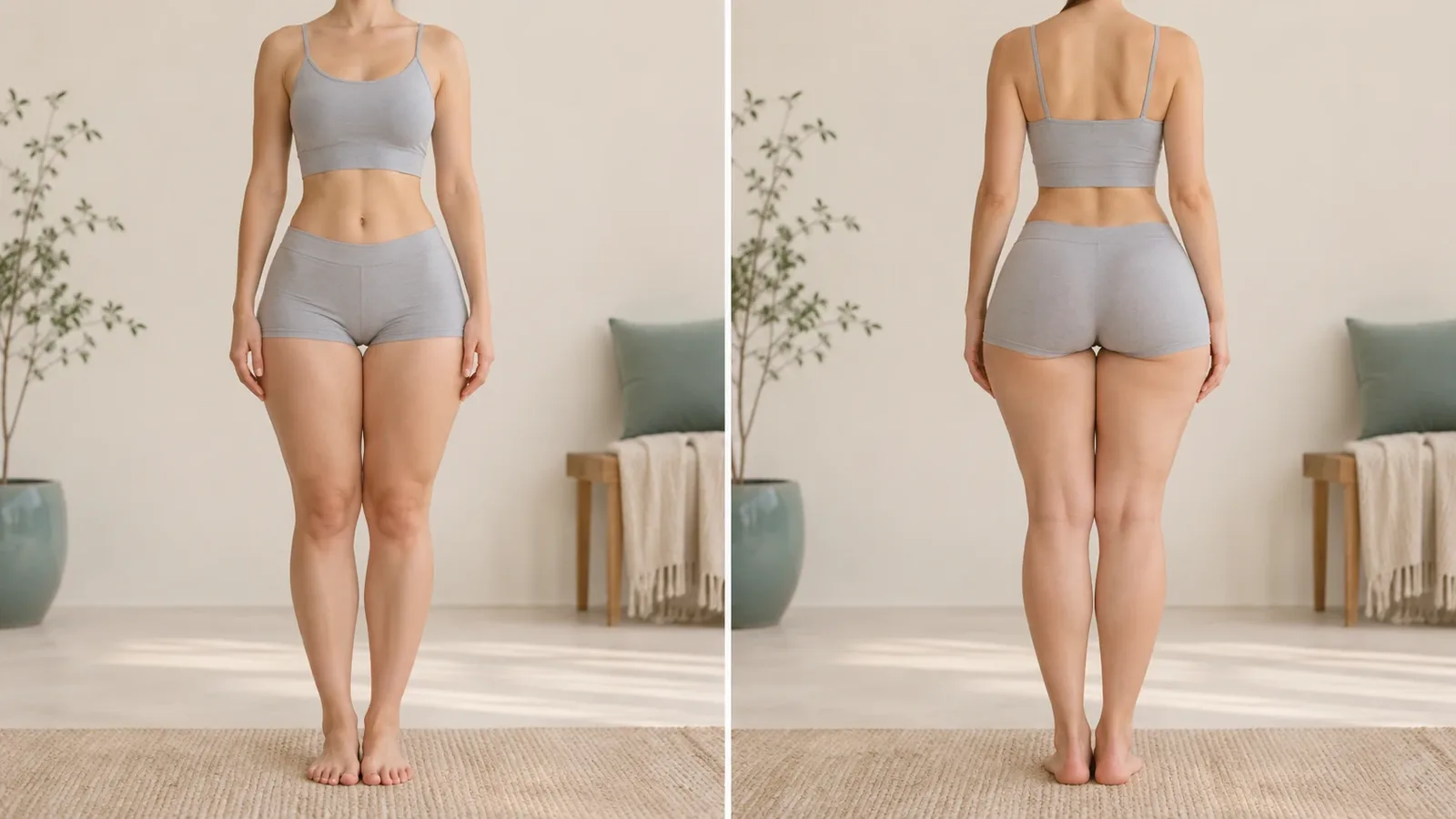
What lipedema looks like at a glance
Five features describe the visual pattern. They do not all have to be present, and none confirms the diagnosis on its own:
Disproportion: more volume in the hips, thighs and legs than in the waist and torso. According to the S2k guideline, lipedema affects the limbs and not the trunk; if obesity is also present, it is proportional and does involve the trunk.
Symmetry: both legs (or both arms) are affected equally. A clear difference between one side and the other points to other causes, such as lymphedema.
Feet and hands spared: the extra volume stops at the ankle or the wrist, which gives the typical «step» or «cutoff» look.
Areas: it can stay in the hips and buttocks, extend to the knees or reach the ankles. It describes where the fat is, not how severe the disease is.
Knees: the volume can form a pad on the inner side of the knee that creates a change in contour.
And one feature does not appear in any image: pain. The S2k guideline stresses that lipedema is always painful, with pain on pressure and touch, a feeling of tension, heaviness or spontaneous pain. A symmetrical disproportion without pain is called lipohypertrophy and falls outside its definition. If you see the disproportion but it does not hurt, it is still worth bringing up at a consultation: only an examination clarifies what it is. More in lipedema symptoms.
The detail that shows up most: the step at the ankle
If one feature helps tell lipedema apart from other reasons for fuller legs, it is this: the extra volume stops at the ankle and the foot keeps its size. In the clinic, doctors also check a maneuver on the toes called the Kaposi-Stemmer sign, which is negative in lipedema and can turn positive when a lymphatic component is added.
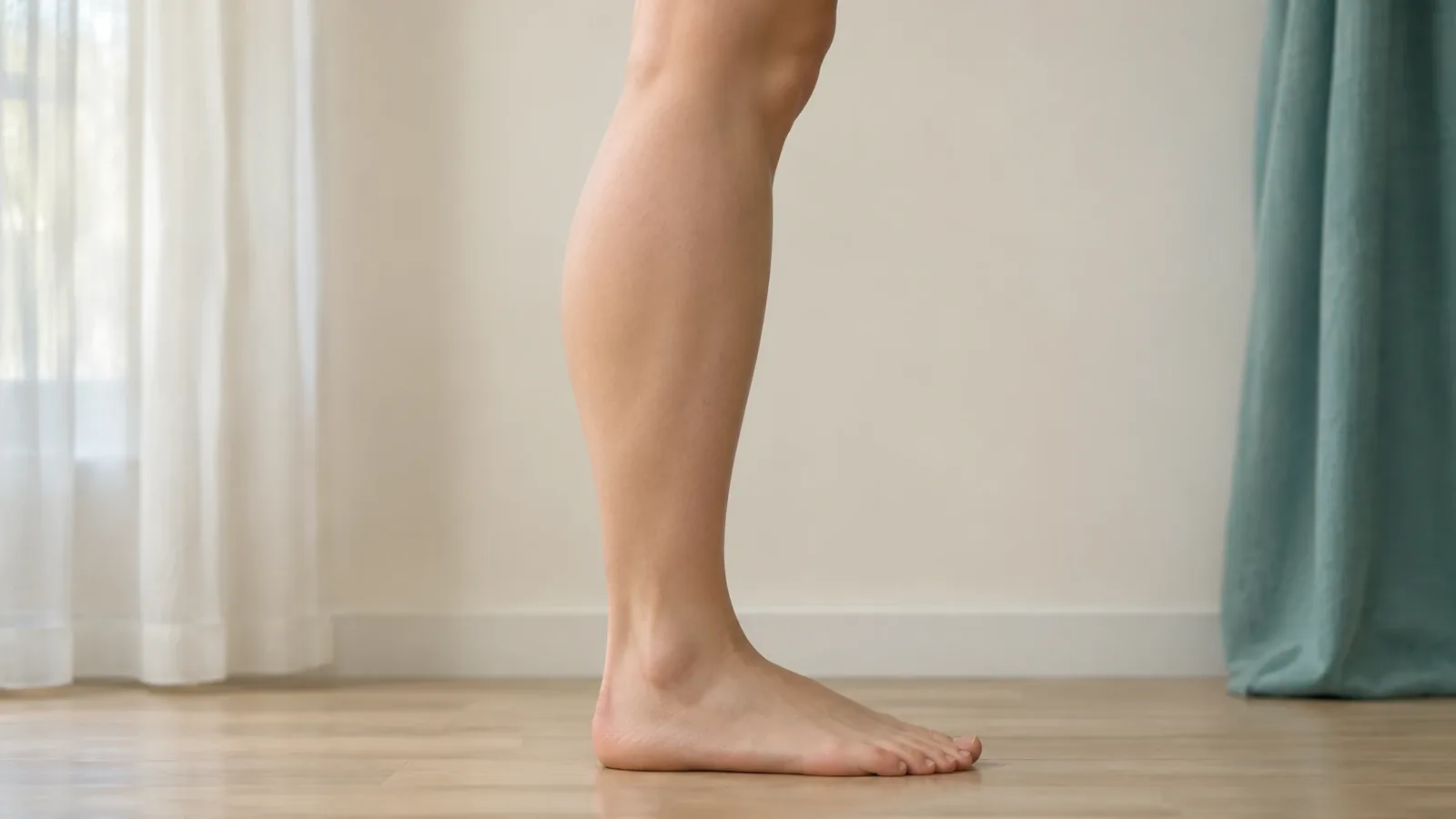
When the foot does swell, or the swelling is on one side only, it is worth thinking about something else or a combination (lipolymphedema). We compare them criterion by criterion in lipedema or lymphedema.
How the skin and tissue change
Over time, and not in every woman, the tissue can change. In the classic description by stages (which the S2k guideline does not detail in this way), the skin looks smooth at first, then undulations appear and, in more advanced cases, lobes of tissue that change the contour. You can see the stages with our own illustrations in stages and types of lipedema.
Two points from the S2k guideline prevent misreading. First: stages describe how the tissue looks, not how severe the disease is, and there is no severity scale for symptoms. Second: the criterion of «nodular fat», widely used in the past, should not be used on its own to diagnose because it lacks validity. For the same reason, the look of the skin alone neither confirms nor rules out lipedema: pain, symmetry and the examination are what count.
And in the arms and knees, what it looks like
Lipedema is not only about the legs, although it is less common in the arms. According to the S2k guideline, in the upper limb it symmetrically affects the shoulder region, the upper arm or the forearm, and the hands are spared, just like the feet. Visually it is the same pattern: disproportionate volume compared with the torso and a clear change at the wrist. We cover it in thick arms and lipedema, and what happens at the knee in knee fat and lipedema.
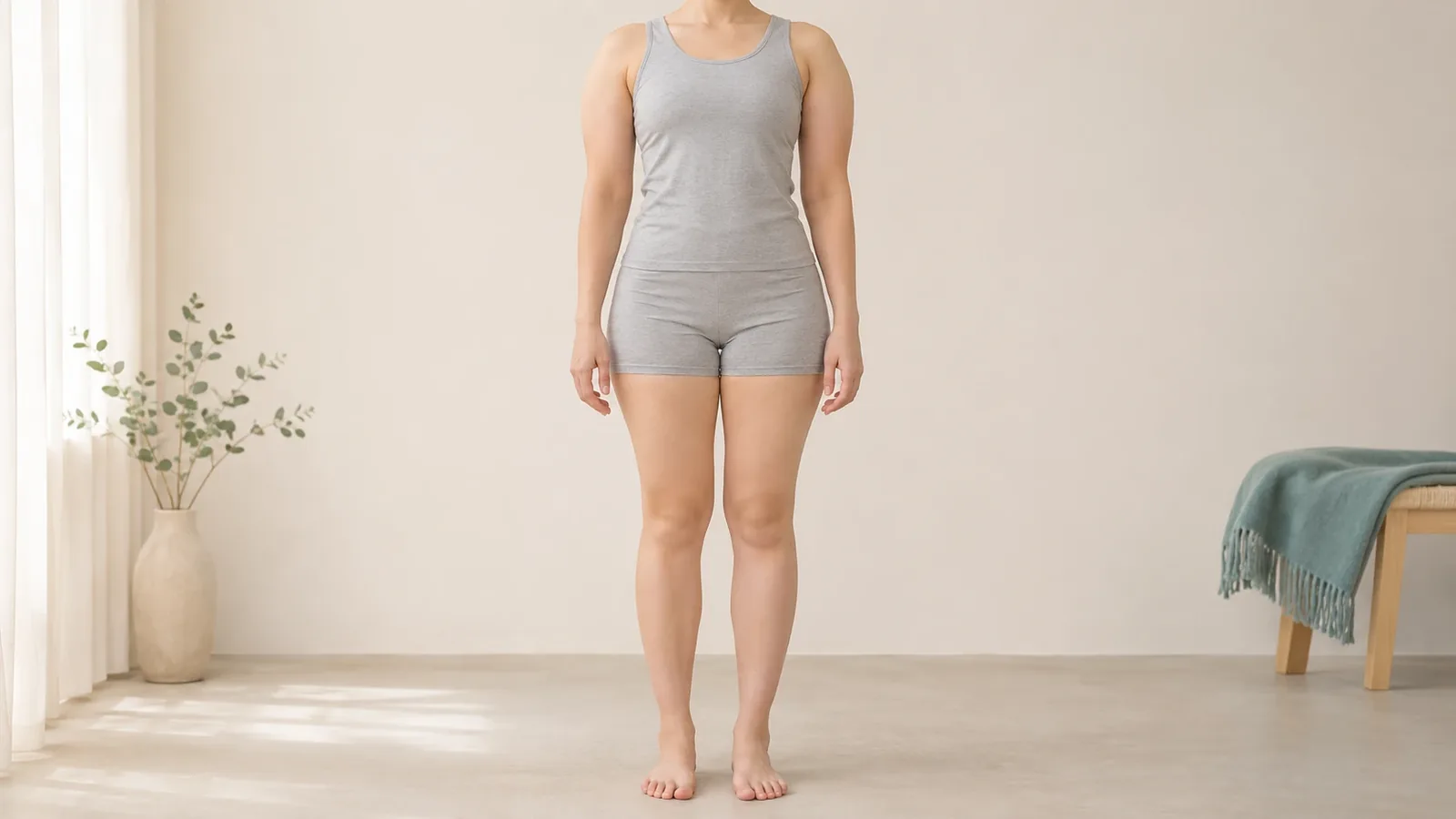
What cannot be seen: swelling, heaviness and bruising
Many women describe their legs «swelling» during the day and bruising easily. Both deserve nuance. In a comparative study of women with and without lipedema, end-of-day swelling could not be measured, and the authors concluded that the sensation is part of how pain is experienced. Bruising is frequently reported, but it is not considered a decisive diagnostic criterion, and another study could not objectify it either.
That does not mean it is not happening to you: if the swelling is new, increasing or affects the feet, have it checked, because it can have other causes. More on bruising in bruising on the legs without an injury.
What looks like lipedema but is not
Fuller legs have many causes. This table summarizes how to tell them apart at a glance, and each row is developed in the page linked below:
| Condition | What it looks like | Pain and feet |
Lipedema | Symmetrical, disproportionate increase from the hips downward; torso without that increase | Painful on pressure. Feet spared |
Obesity | Proportional increase throughout the body, torso included. Can coexist with lipedema | Pain on pressure is not characteristic. Hands and feet can also be affected |
Lymphedema | Swelling from fluid buildup, often on one side only | Not painful on pressure the way lipedema is. Usually reaches the top of the foot and toes |
Cellulite | Superficial «orange peel» skin, without a gap between torso and legs | Usually painless. Does not create a step at the ankle |
Lipohypertrophy | Symmetrical disproportion like lipedema | Painless. Outside the S2k definition of lipedema |
Three features help you orient yourself: pain on pressure, symmetry and the foot. To go deeper: difference between lipedema and cellulite and why legs can be thick with a slim body.
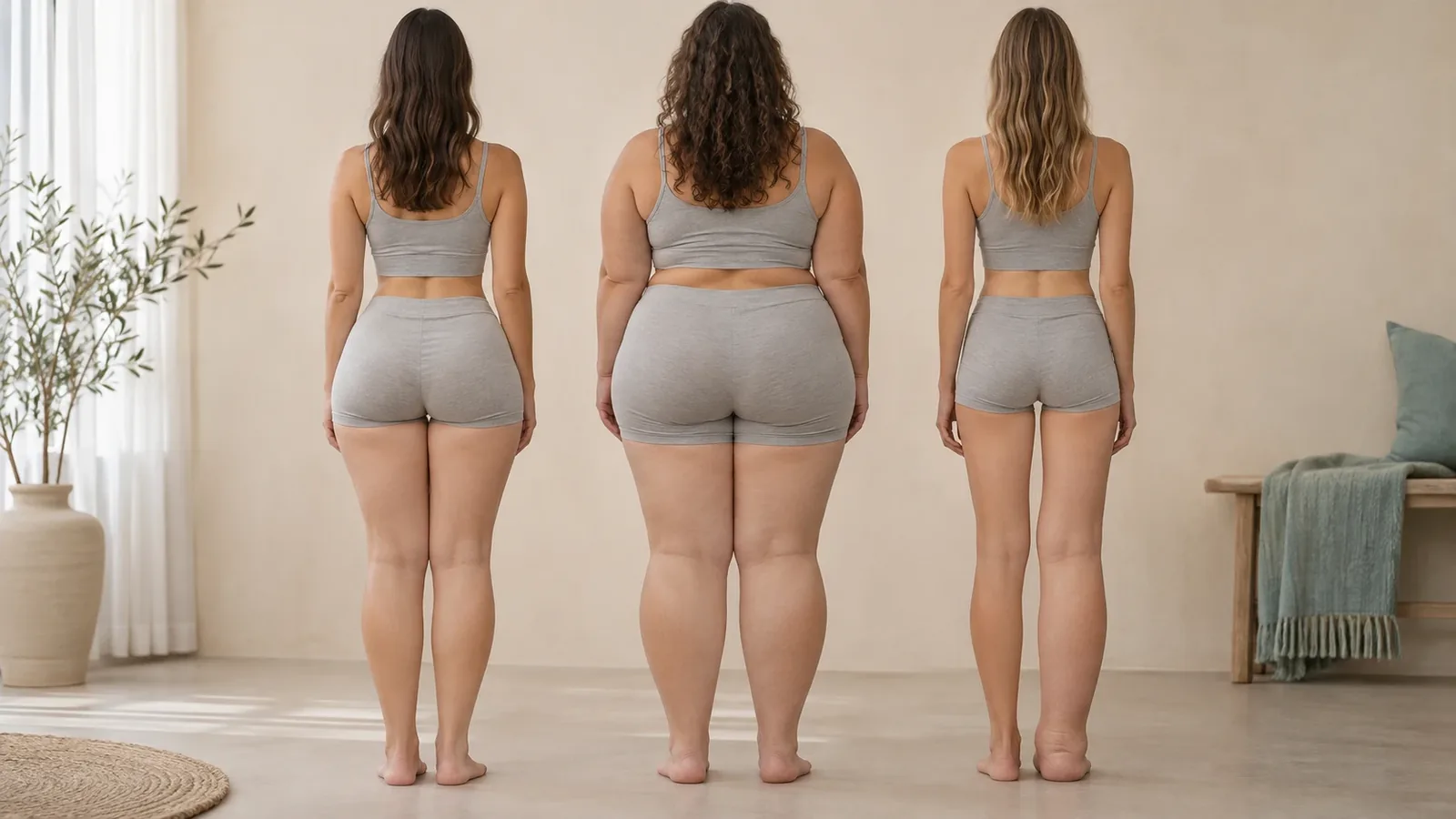
Pictures of lipedema legs: what they show and what they do not
It is not for lack of images: it is a decision. At Lipedema Advanced Care we do not publish patient photos or before-and-after pictures, and the images on this page are for reference: they do not correspond to any real patient. There are four reasons:
A photo is a single moment. It changes with light, angle, posture and clothing, and it does not show the most important things: pain, what is felt on palpation and each woman's history.
Appearance does not measure severity. The S2k guideline recommends not using stages as a measure of severity: two women with similar-looking legs can have very different symptoms.
Comparing yourself with someone else is confusing. Looking «different» from a photo does not rule lipedema out, and looking «the same» does not confirm it.
Without clinical context there is no diagnosis. A loose image does not tell whether there is pain, since when, or what else has been ruled out.
If you want to see how the stages are described, our illustrations are in stages and types of lipedema; and if you need clinical images, the right source is medical publications, such as the S2k guideline in the sources section, and your own consultation.
What to look for in the mirror, without diagnosing yourself
In good light and light clothing, these four looks help you decide whether a consultation is worth it. They are not a diagnosis:
From the front: compare your waist with your hips and both legs with each other. Are they symmetrical?
From behind: check whether the volume of the hips and thighs is similar on both sides and greater than that of your back.
From the side: look at the inner side of the knees and whether the volume changes abruptly at some point.
The ankle and foot: does the volume stop at the ankle, with the foot keeping its shape?
And add what cannot be seen: whether gentle pressure hurts more than expected, and whether it started with puberty, a pregnancy or menopause (the S2k guideline notes that symptoms usually start or increase in those phases). If several things match, take the lipedema test and request an assessment.
What happens at the consultation, and when to go
The diagnosis is made from the clinical history and a physical exam: the doctor asks about pain, family history and hormonal changes, and looks at and palpates the tissue, the symmetry and the feet. Lab tests and other tests are used to rule out other causes, not to prove lipedema. The guide to lipedema diagnosis walks through what is examined.
Book a visit calmly if you notice symmetrical disproportion, pain on pressure or heaviness that keeps coming back. If a leg becomes red, hot and painful with fever, or a single leg swells suddenly, go to the emergency room: these are not typical of lipedema and can occur on top of it (we detail them in lipedema or lymphedema).
Our team works with patients who travel from abroad: we review your history and examine you, and if it turns out not to be lipedema, we will tell you, because ruling it out is part of the job. You can write to us through the clinic's contact form and meet the medical team first. What comes next, if it is confirmed, is in lipedema treatment.
Frequently asked questions about what lipedema looks like
How do I know if I have lipedema in my legs?
Look at three things: whether both legs are affected equally, whether the volume stops at the ankle, and above all whether they hurt on pressure. If they match, request an assessment: the diagnosis is clinical and has to be made by an experienced professional. You can get a first idea with the lipedema test.
Can lipedema be diagnosed from a photo?
No. The S2k guideline states that the diagnosis is clinical and that no imaging or lab test proves it; a photo does not show pain or what is felt on examination. If you take photos to track how things change, always use the same light and the same posture, and do not compare them with other people's.
Why do you not show patient photos?
Because a photo does not show pain, depends on light and angle, and comparing yourself with someone else can mislead you. We prefer reference images and criteria that do not depend on an image: pain, symmetry and the foot.
Does lipedema look the same in every woman?
No. It shares a pattern (symmetry, disproportion, spared feet), but the affected areas, the look of the skin and, above all, the symptoms vary. That is why classifications by area and by stage are descriptive and do not measure severity.
Can you have lipedema with a slim body?
Yes. The S2k guideline states that lipedema is not caused by obesity nor does it cause it, although excess weight can make it worse; that is why it also appears in slim women, in whom the disproportion is more noticeable. That said, in clinical series most patients are overweight or obese by BMI and only a minority are at a normal weight. We cover it in why legs can be thick with a slim body.
Does the look tell you how severe lipedema is?
No. The S2k guideline recommends not using appearance-based stages as a measure of severity and notes that there is no severity scale for symptoms. What counts most is pain, the impact on your daily life and the medical assessment.
Sources and references
Guideline S2k Lipoedema, AWMF 037-012, version 5.0 (2024). Recommendations 1.1, 2.3, 2.4, 2.5, 2.12 and 2.16; sections 1.4 (Kaposi-Stemmer sign), 1.6 (hormones) and 2.2.2 (symptoms).
Kruppa P et al. Lipedema World Alliance Delphi Consensus-Based Position Paper on the Definition and Management of Lipedema. Nat Commun, 2026. Statement 32: no imaging, serological or genetic tests, or clinical measurement instruments, are officially approved to verify the clinical diagnosis.
Content prepared by the medical team at Lipedema Advanced Care based on the S2k clinical guideline on lipedema (AWMF 037-012, 2024 version) and the sources cited.
Published in November 2026.
This page is for general information and does not replace a medical consultation. The diagnosis of lipedema is clinical and must be made by an experienced professional. The images are for reference and do not represent any real patient.

