
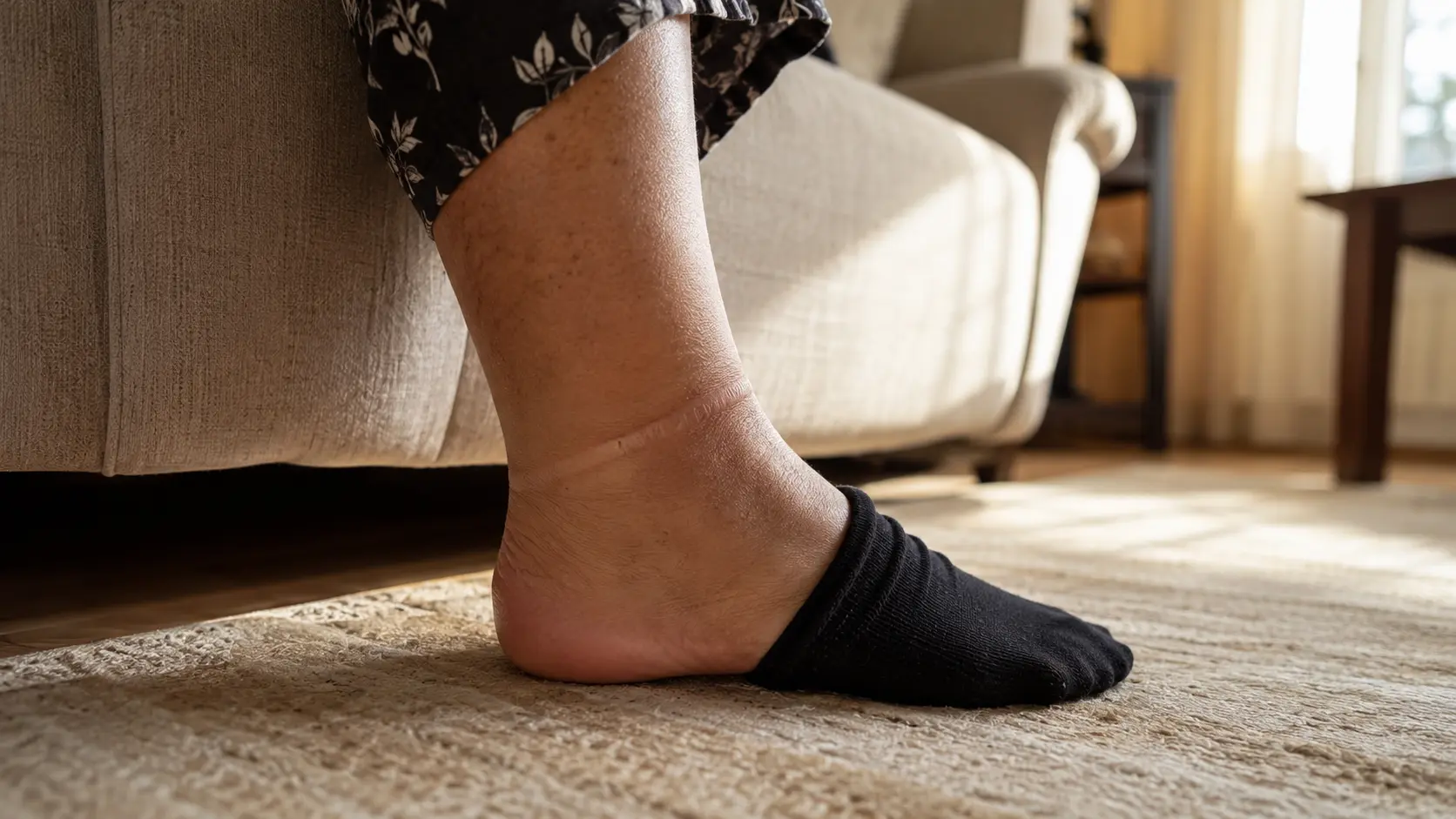
They swell by the end of the day, the sandal strap does not fasten, and by morning they are almost back to normal. Or they are not. Swollen ankles are one of the most common reasons for a consultation and one of the worst explained, because underneath that same symptom there are causes that resolve by putting your feet up and others that need looking at the same day.
We are going to order this the way it gets ordered in a consultation: rule out the urgent first, then look for the cause, and only at the end talk about lipedema. Because it is worth saying from the start: most swollen ankles are not lipedema.
The urgent part first: when not to wait
There are situations where a swollen ankle or leg does not allow for «let us see next week». If you recognise any of these, seek medical attention the same day:
One leg only, suddenly, with pain or warmth: abrupt swelling in one leg, with calf pain, warmth or redness. That is the picture that requires ruling out a deep vein thrombosis.
Swelling with breathlessness or chest pain: this is not something to wait on. It needs urgent assessment.
Red, hot, painful skin with fever or feeling unwell: this can be a skin infection such as erysipelas or cellulitis, which needs antibiotics rather than cream.
Swelling climbing rapidly up the leg over days, or accompanied by marked weight gain in a short time and breathlessness when lying down.
A wound that will not close in the swollen area, or skin that starts to weep.
If none of that applies, breathe: you are most likely in the territory of causes that can be worked up calmly. But the order matters, which is why it comes first.
Why ankles swell: the real causes
This is the honest list, ordered from most to least frequent, not by what suits a clinic.
| Cause | How to recognise it |
Heat, hours on your feet or a long journey | Both ankles, appears by the end of the day, gone by morning. Worse in summer and with prolonged immobility. |
Chronic venous insufficiency | Both ankles, worse at the end of the day, improves when you elevate the legs. Usually visible varicose veins, heaviness, and over the years skin colour changes at the ankle. |
Medication | Swelling that started weeks after beginning or increasing a drug. A very frequent cause and a very rarely suspected one. |
Pregnancy | Progressive in the third trimester. Needs obstetric review if it appears abruptly, in the face or hands, or with headache. |
Heart, kidney, liver or thyroid | Both sides, marked pitting, sometimes climbing up the legs. May come with fatigue, breathlessness or changes in urine. |
Lymphoedema | Involves the foot and the toes too. Pits at first; over time the tissue hardens. |
Lipedema | Both sides, spares the foot, hurts when pressed and does not go away by morning, because what lies underneath is fat and not fluid. |
The medications that swell ankles
This deserves its own section because it is the cause most often missed. Several very common drug groups can produce ankle oedema:
Some blood pressure medications, particularly calcium channel blockers of the amlodipine type, which swell ankles fairly often.
Anti-inflammatories such as ibuprofen or naproxen, especially taken daily.
Corticosteroids.
Some drugs for neuropathic pain, such as gabapentin or pregabalin.
Hormone treatments and contraceptives.
Some diabetes drugs of the glitazone group.
The only sensible advice here: if you take any of these and your ankles started swelling after you began, raise it with whoever prescribed it. Do not stop on your own, because the drug is treating something.

When blood tests make sense
If the swelling is on both sides, persistent, and does not fit with heat or with a drug, basic blood work helps rule out three things that are treated very differently. The reference clinical guideline for lipedema, in the section on working up oedema, names exactly these: TSH, FT3 and FT4 to rule out an underactive thyroid, creatinine and glomerular filtration rate in blood plus protein in urine to assess kidney function, and NT-proBNP to rule out decompensated heart failure.
You do not need to memorise them. They are useful for something else: if you have had swollen ankles for months and nobody has looked at any of this, it is reasonable to ask.
Telling fluid retention, lymphoedema and lipedema apart
All three swell the leg and they are constantly confused. These are the four checks that orient the most.
| Sign | Retention or venous | Lymphoedema | Lipedema |
Does it pit when pressed? | Yes, the dent stays for a few seconds | Yes at first, then the tissue hardens | No, or barely: it is not fluid |
Does it involve the foot? | It can | Yes, and the toes too | No: it stops at the ankle |
Symmetrical? | Usually, but can be one-sided | Frequently one side only | Always both legs |
Better in the morning? | Yes, noticeably | Barely | No |
Painful when pressed? | Uncomfortable, heavy | Usually not painful | Yes, one of its defining features |
There is one more check that specialists use and that is worth knowing: the Kaposi-Stemmer sign. It consists of trying to pinch the skin at the base of a toe. If you can pinch it, the sign is negative; if the skin cannot be lifted, it is positive and points to lymphoedema. In pure lipedema the sign is negative, and it can become positive when a lymphatic component is added to the lipedema, something the guideline itself records and which is more frequent at advanced stages.
The cuff sign at the ankle, the clue that orients the most
If you had to keep one clue, this is it. In lipedema the increase in volume stops sharply at the ankle and leaves the foot normal: you see a step, as if the leg were wearing a cuff or bracelet. The guideline says it plainly, lipedema does not affect the feet or the hands.
Which means a swollen ankle with a swollen foot points somewhere else: retention, a venous problem or a lymphoedema. And a thick ankle with a slim foot, in both legs, in a woman, painful on pressure and with bruises that appear on their own, is the picture that makes you think of lipedema. We develop it in the comparison between lipedema and fluid retention.
Why it gets worse in hot weather
This is not an impression. Among the classic clinical criteria the guideline records is precisely this one: swelling below the knee is accentuated when the person spends a lot of time on their feet and when the weather is warm.
The reasonable explanation is that heat dilates the vessels and makes it easier for fluid to move into the tissue, on top of a drainage system that was already stretched. Add the hours standing, the travelling, and the fact that in summer compression gets abandoned exactly when it is needed most. Hence why more people search for swollen ankles in July and August than at any other time.
What not to do
Take diuretics on your own. This is the most common mistake. For lipedema the guideline is explicit: diuretics should not be used to treat it, with 94.4% panel consensus. And in oedema from heat or standing they do not address the cause either. It is a different matter when a doctor prescribes them for a cardiac or renal reason.
Wrap a tight bandage without being assessed. Badly indicated compression can do harm, and there are situations where it is contraindicated.
Accept that «it is normal». Common does not mean it should not be looked at, particularly if it has been going on for months.
Look for the answer on the bathroom scales. If the swelling is venous, lymphatic or in the tissue, weight does not explain it and losing kilos will not resolve it on its own.
What does help while you are being assessed
None of these replaces a diagnosis, but all of them are reasonable and none does harm:
Elevate your legs above heart level for a while at the end of the day, rather than sitting with your feet hanging down.
Move every hour if you work standing or seated. The calf contraction is the pump that returns blood upwards.
Cool water over the legs at the end of a shower, from the bottom upwards.
Properly indicated compression. A pharmacy stocking is not the same as a garment prescribed with its class and its fabric: we explain it in the guide to compression garments.
Manual lymphatic drainage if there is a fluid component and a professional indicates it. Done properly it neither hurts nor bruises, as we set out on the manual lymphatic drainage page.
Cut back on salt and review alcohol, which retains fluid, without turning it into an impossible diet.
When to think about lipedema
If reading the above you recognised yourself in the last column of the table, a specific assessment is worth it. The typical picture is a woman with both legs enlarged out of proportion to the trunk, with pain or discomfort on pressure, bruises that appear from a knock, and that step at the ankle leaving the foot normal. It usually started at puberty, a pregnancy or menopause, and there are usually other women in the family with the same legs.
The diagnosis is clinical: there is no test that confirms it, and what the tests do is rule out what resembles it. How it is examined and what gets ruled out is on the lipedema diagnosis page, and if you want to place what you see on your own legs, on the stages and types.
And one more thing, because it is the most reassuring: if the diagnosis is not lipedema, we will tell you and point you towards where it does belong. Ruling out is part of the job.
Frequently asked questions about swollen ankles
Why do my ankles only swell in summer?
Because heat dilates the vessels and makes it easier for fluid to move into the tissue, and because in summer you spend longer on your feet, travel more and abandon compression. It is the most frequent pattern and the most benign: both ankles, at the end of the day, back to normal by morning.
Is swelling without pain serious?
Not necessarily, and the absence of pain makes a thrombosis or an infection less likely. But painless swelling that persists for weeks in both legs deserves blood work, because the heart, the kidney and the thyroid can produce exactly that.
How do I know whether it is fluid or tissue?
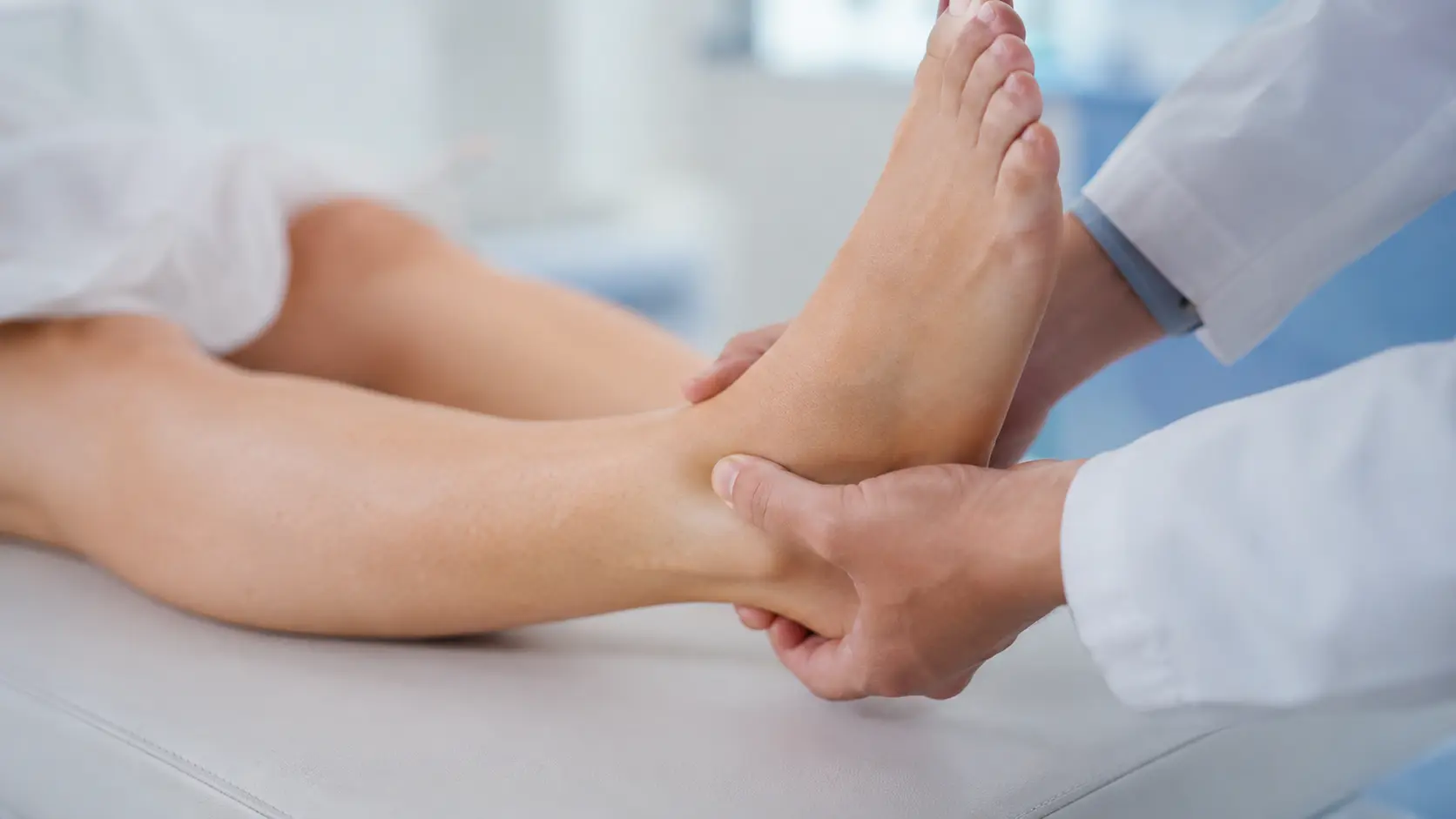
The simplest test is to press with a finger for a few seconds over the ankle bone. If a dent stays and takes time to recover, there is fluid. If the tissue is dense, hurts when pressed and leaves no mark, it points elsewhere. And if the leg looks the same in the morning as it did at night, it is not just retention.
Do diuretics help?
For lipedema, no: the clinical guideline states expressly that they should not be used to treat it. For oedema from heat or standing, they do not address the cause either. They only make sense when a doctor prescribes them for a specific reason, usually cardiac or renal.
Can it be lipedema if only my ankles are swollen?
Lipedema affects whole segments of the leg, not just the ankle, and always symmetrically while sparing the foot. There is a type confined to the area from the knee to the ankle, so it is possible that the calf and ankle are what stand out most. What does not fit lipedema is one ankle alone, or an ankle with a swollen foot.
If it has been months and nobody has explained why
It is the most common situation we see, and it is not the patient’s fault. Our assessment includes examination, a vascular study with duplex ultrasound to rule out venous disease and identify any lymphatic component, and a written report with the findings. You leave knowing what you have, and if it is not lipedema, that too. You can see who carries out the assessment on our medical team page, and consultations are held in Spanish and English.
Sources and references
S2k guideline Lipoedema, AWMF 037-012, version 5.0 (2024). For the Kaposi-Stemmer sign, the sparing of feet and hands, the laboratory parameters in the oedema work-up and Recommendation 6.1 on diuretics.
Carballeira Braña A, Poveda Castillo J. The Advanced Care Study: Current Status of Lipedema in Spain. Int J Environ Res Public Health, 2023;20(17):6647. View on PubMed
World Health Organization. ICD-11, code EF02.2 Lipoedema.
Medically reviewed content. Produced by the medical team at Lipedema Advanced Care and reviewed by Dr Alexo Carballeira Braña, plastic surgeon (SECPRE recertified) specialising in the treatment of lipedema and registered with the ICOMV. This information is for general guidance and does not replace a medical consultation. If you have sudden swelling in one leg, breathlessness, chest pain or fever with red hot skin, seek medical attention the same day. Last updated: August 2026.

