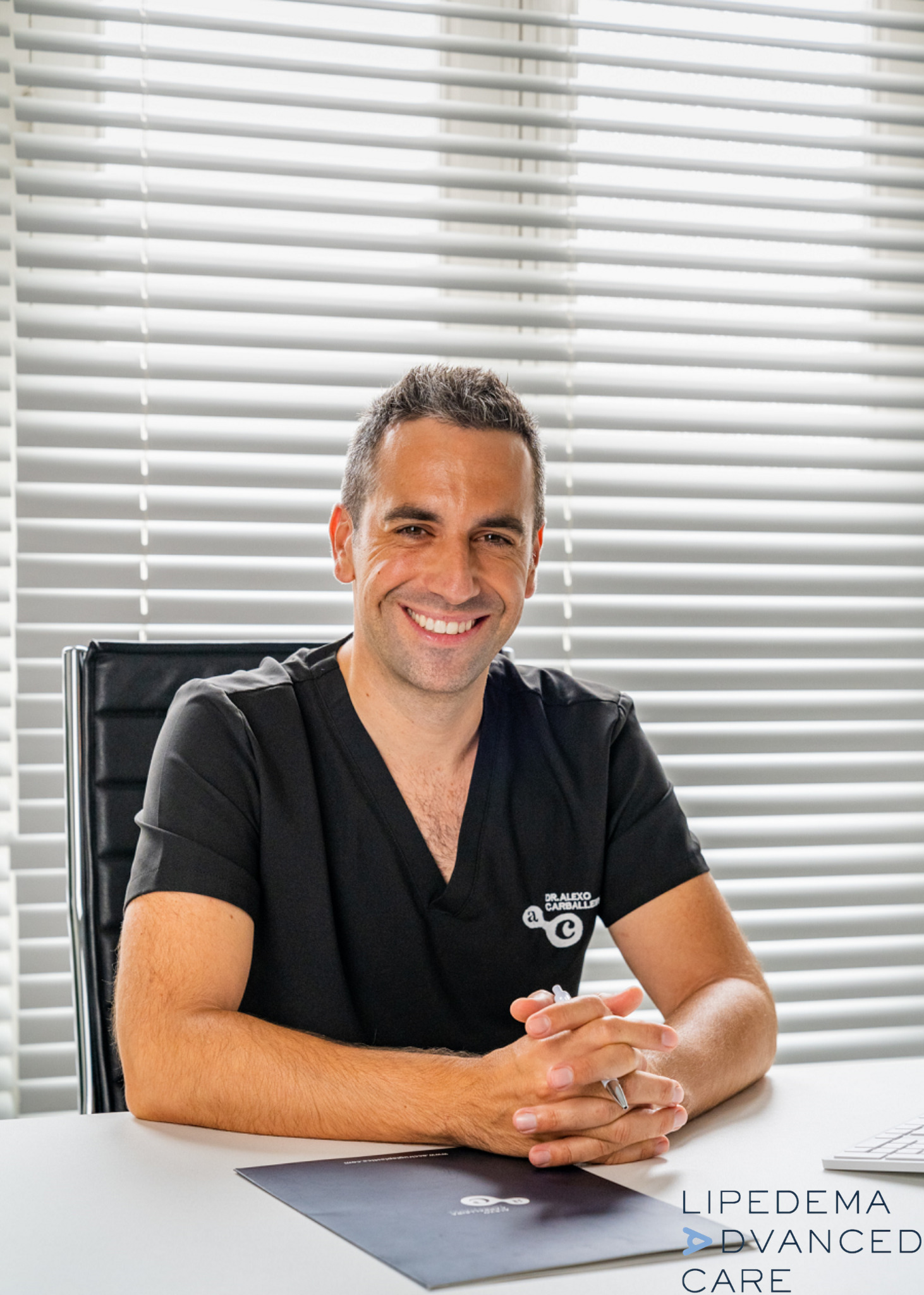
The Advanced Care Method: lipedema, from start to finish
The Advanced Care Method is our integrated protocol for treating lipedema: precise diagnosis, specialised surgery with preservation of the lymphatic system and a supported recovery, coordinated by the same team. Lipedema is a chronic condition; the method aims to reduce the diseased tissue and improve your quality of life, not to cure it.
A method, not a stand-alone technique
Most disappointing results in lipedema do not come from a poor technique but from a poor process: an incomplete diagnosis, surgery without a lymphatic-preservation criterion, or a recovery without follow-up. The Advanced Care Method orders those three phases into a single protocol, with the same team from start to finish.
It is not cosmetic liposuction: it starts from a medical and vascular diagnosis, respects the lymphatic system during extraction and continues with a structured after-care. The goal is therapeutic and functional.
Lipedema, lymphoedema or obesity: the differential diagnosis
Many women spend years misdiagnosed. Distinguishing lipedema from other causes is the first step to avoid wasting time on the wrong approach.
| Sign | Lipedema | Lymphoedema | Obesity / cellulite |
|---|---|---|---|
| Distribution | Symmetrical in legs and/or arms | Often asymmetrical | Generalised |
| Pain | Frequent, on pressure | Variable | Usually not |
| Hands and feet | Spared | Usually affected | Not specific |
| Response to diet | Poor in legs/arms | Not applicable | Responds to calorie deficit |
| Easy bruising | Yes | Not typical | No |
Indicative. The diagnosis is confirmed by an experienced professional. See the lipedema diagnosis.
Lipedema stages and approach
The stage helps guide the approach, although it is not the only criterion: the impact on quality of life weighs as much as the classification.
| Stage | Characteristics | Usual approach |
|---|---|---|
| Stage 1 | Smooth skin with small nodules beneath the surface | Conservative; surgery if there is pain or functional impact |
| Stage 2 | Uneven skin and larger nodules | Conservative + surgical assessment |
| Stage 3 | Large deformities and lobules of tissue | Surgery + conservative management |
Lipedema has no cure; the goal is to reduce the diseased tissue and control the symptoms.
Precise diagnosis
Before operating, you have to see. Our assessment combines a clinical examination with two key tools:
- 3D body scan (Bodygee): maps the contour to plan and measure progress.
- Vascular study with Doppler ultrasound: led by Dr. Marta Zaplana, angiologist and vascular surgeon, to map venous and lymphatic status before any intervention.
That vascular safeguard is what makes it possible to operate safely and preserve the lymphatics.
Lymph-preserving surgery: three techniques, one criterion
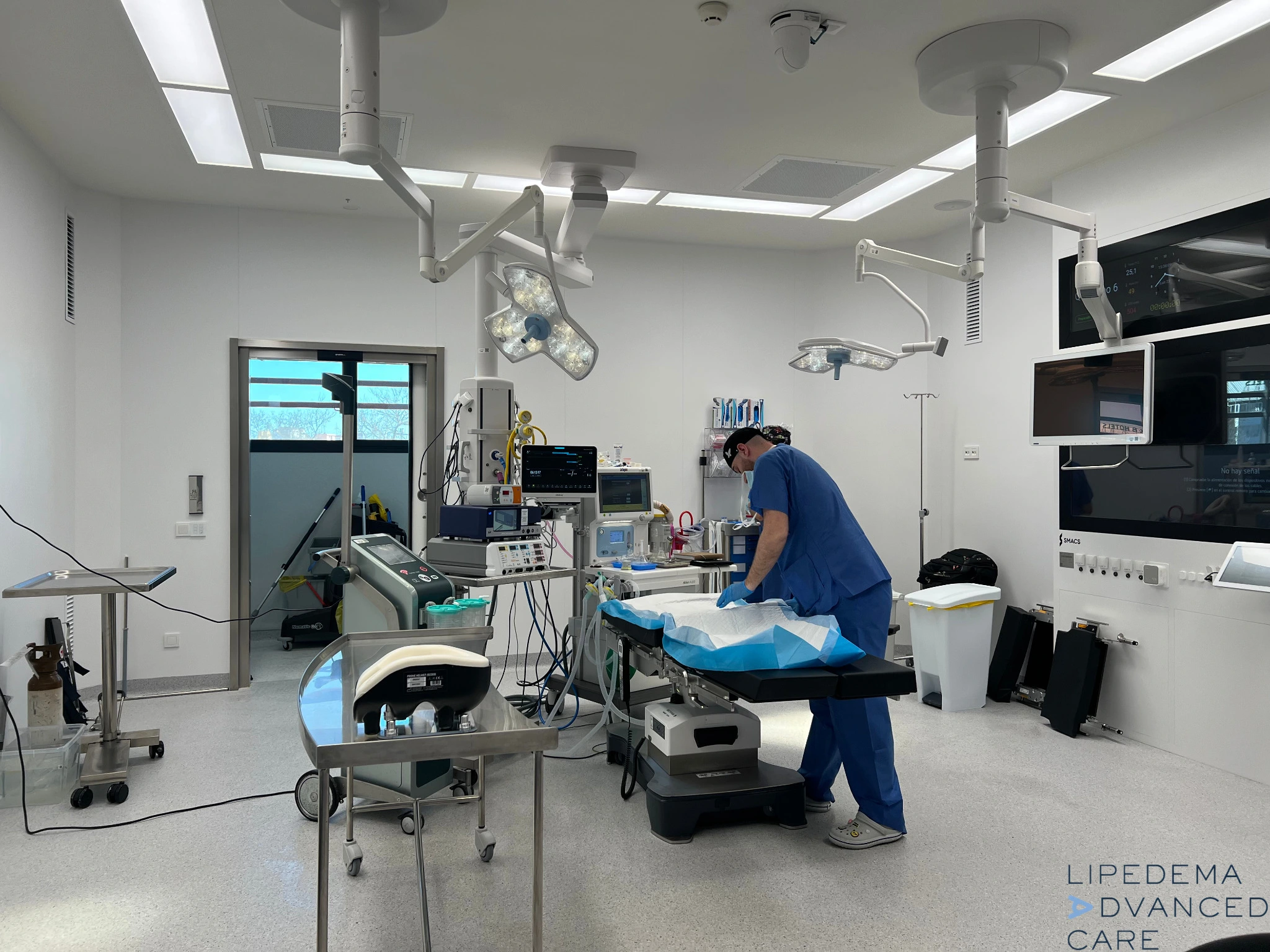
We do not use a single technology: we select and combine the most suitable one according to the tissue, the area and the goal, always preserving the lymphatic system.
| Technique | What it does | When it is used | More information |
|---|---|---|---|
| WAL | Water-assisted, lymph-preserving extraction | The basis of extraction in most cases | WAL liposuction |
| PAL | Power-assisted vibration for fibrous tissue | Fibrous areas and large volumes | PAL liposuction |
| Renuvion® | Helium plasma for skin retraction | When there is laxity or risk after extraction | Renuvion® |
The sequence and combination are decided individually. See the lipedema surgery step by step.
Supported recovery
Recovery is part of the result: compression, lymphatic drainage and medical follow-up until the tissues adapt over several months. We break it down by phases, with its care and timings, in lipedema surgery recovery. As comfort measures we also use cold pneumatic compression and LED photobiomodulation, without attributing any effect on lipedema to them.
A specialised team, not a generalist surgeon
Lipedema is not treated like cosmetic liposuction. Safety and results depend on the team's specific experience: a rigorous vascular diagnosis, a lymph-preserving technique and real medical follow-up. Meet Dr. Alexo Carballeira and the medical team.
Questions about the Advanced Care Method
How do I know if I have lipedema?
By signs such as symmetrical disproportion in the legs or arms, pain on pressure and easy bruising, with hands and feet spared. It is confirmed by a medical assessment; see the diagnosis.
What is the difference between lipedema and lymphoedema?
Lipedema is a symmetrical, painful fat build-up that spares hands and feet; lymphoedema is a build-up of lymph that usually also affects the feet. Advanced lipedema can involve lymphoedema (lipo-lymphoedema).
Can lipedema be removed without surgery?
Conservative treatment (compression, drainage, habits) controls symptoms but does not remove the diseased tissue. Surgery is today the most effective way to reduce it when indicated.
Does surgery cure lipedema?
No. Lipedema is chronic and has no cure. Surgery reduces the diseased tissue and improves symptoms and quality of life, but management continues.
How many surgeries do I need?
It depends on the volume and areas. It is often planned in several stages for safety; it is defined individually.
Does the fat come back afterwards?
The removed lipedema fat does not return, but as it is a chronic disease, maintenance and follow-up are recommended.
Which technique do you use and why do you combine several?
WAL as the lymph-preserving base, PAL for fibrous tissue and Renuvion® for skin retraction. They are combined according to the case to optimise safety and result.
How is the AC Method different from ordinary cosmetic liposuction?
It starts from a medical and vascular diagnosis, respects the lymphatic system and continues with a structured after-care. The goal is therapeutic, not cosmetic.
How long is full recovery?
Light activity resumes within a few weeks and the result settles over several months. See recovery.
Sources and references
3D body scanning: measuring instead of estimating
The clinical guideline requires documenting the starting point and the evolution with objective measurements: weight, height, waist, hips and limb circumferences. The 3D body scanner is the tool we use to meet that requirement, and it does something a tape measure cannot: record the full contour and compare it against itself months later.
It is worth being precise about what it is and what it is not. It is neither a treatment nor a diagnostic test: the scanner does not confirm lipedema. It is a measuring instrument, and its value lies in three specific moments:
- At the first assessment, to document the starting point.
- In surgical planning, to define the areas and the volume to be treated.
- In follow-up, to measure change objectively.
That last point matters most to us, for a reason that goes beyond the technology: it lets us follow progress without resorting to before-and-after photographs. Comparable numbers say more than two images, and they do not expose the patient.
How it fits into the full confirmation process is set out in lipedema diagnosis, where it appears alongside the other tests with its exact role.