Photobiomodulation and lipedema:what can and cannot be said
We use it after surgery, and this page still opens with the awkward part: the reference lipedema guideline does not mention it in any of its 96 pages. Here is where the evidence actually is, where it is not, and what exactly we use it for.
What photobiomodulation is and what it is not
Photobiomodulation means applying low-power light to tissue, with LEDs or with a laser, at wavelengths in the visible red and the near infrared. It is also known as low-level laser therapy or LED therapy, and the important point is that it is not the kind of laser that cuts, coagulates or removes hair: it works far below the power at which light damages tissue. Hence the name: it does not destroy, it modulates.
The proposed mechanism is that this light is absorbed by an enzyme in the mitochondria, which transiently changes the cell's energy production and its inflammatory response. Worth being precise: that is the proposed mechanism, not a settled fact, and it is the same one invoked for dozens of different indications, some well studied and some not at all.
Three parameters decide whether two light treatments are comparable or have nothing to do with each other: wavelength, power and dose per session. When a clinic or a manufacturer will not declare those three numbers, there is no way to know what is being applied or to compare it with any published study. It is the first question worth asking.
What the lipedema guideline says about light: nothing
The S2k lipedema guideline, version 5.0 of January 2024, is the international reference document: 96 pages covering diagnosis, compression, drainage, exercise, medication, surgery, psychosocial care and even shockwave therapy.
We searched its full text for the words laser, photobiomodulation and light therapy. They appear zero times. Not one recommendation for, not one against, not one passing mention.
That does not mean the technology is useless. It means something more specific and more honest: it has not been studied in lipedema enough for a panel of experts to have anything to say about it. Anyone presenting photobiomodulation to you as a guideline-backed lipedema treatment either has not read the guideline or is counting on you not reading it.
We offer this technology and we write that down anyway, because the alternative is that the patient finds out later.
Where the evidence actually is
Photobiomodulation is not an unsupported technology: what happens is that its support lies in other indications. Here is the map, strongest first:
| Indication | What the evidence is | What it means for lipedema |
|---|---|---|
| Oral mucositis in cancer patients | Its best-established indication, included in supportive care guidelines. | It shows the technique does something real to inflamed tissue. It says nothing about fat. |
| Lymphoedema after breast cancer | Systematic review of 8 trials (2022): reduction in arm circumference and volume at 4 weeks, sustained at follow-up. No significant difference versus placebo in shoulder mobility or pain intensity in the short term. | It is the closest thing to lipedema that exists, because there is a lymphatic component. But lymphoedema and lipedema are not the same: one is fluid, the other is fat. |
| Wound healing and scar quality | Reasonable evidence in wound healing, with protocols that differ widely between studies. | This is the basis of our actual use: recovery from surgery with multiple small incisions. |
| Musculoskeletal pain | Many studies and mixed results, with parameters so variable that pooling them is difficult. | It suggests an effect on pain without allowing a specific dose to be transferred. |
| Lipedema | One single study (Lasers in Medical Science, 2025) on three patients, irradiating one side of the body before a dermolipectomy and using the other side as control. It finds changes in tissue markers and in adipocyte size. No mention in the guideline. | It is the first study in lipedema, and it is a biological signal, not a clinical result: it measures neither pain, nor volume, nor recovery. Three patients do not make an indication. |
Note the caveat on lymphoedema, because it is the part almost nobody quotes: the same review that finds volume reduction does not find significant short-term pain improvement. When a page cites that study by its favourable half only, you know what kind of page it is.
What we use it for
We do not use it to treat lipedema. We use it in recovery after surgery, with three specific aims, none of which is reducing fat:
- Comfort in the first weeks, when the area is swollen and tight.
- How the incisions settle. Lipedema surgery leaves multiple small entry points, and that is where the wound-healing evidence makes most sense.
- Support for the inflammatory component within a protocol that includes compression, drainage and early mobilisation, which are the parts that genuinely carry the recovery.
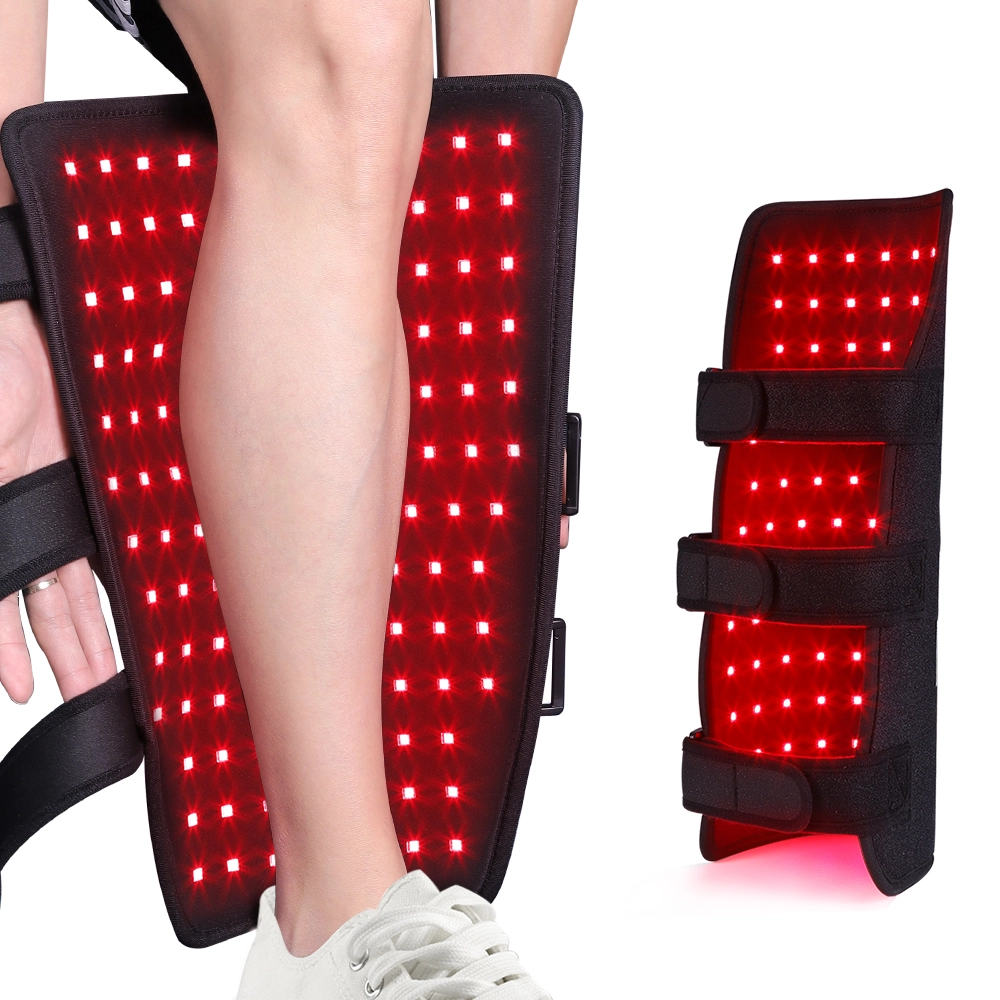
It is an adjunct. If we removed it from the protocol tomorrow, recovery would still work, because it does not depend on light. That is the exact measure of its role, and it is what we explain to every patient before the first session. The full timeline is in recovery after surgery.
Why we offer it at all: because recovery from major surgery is won on comfort and adherence, and anything that helps a patient through the first weeks has clinical value even when it does not appear in a guideline. What we do not do is charge for it as though it were a treatment for lipedema.
Precautions that do apply
Low power does not make it harmless or suitable for everyone. What gets checked before a session:
- Eye protection for the patient and the operator. Light must never be directed at the eye.
- Photosensitising medication. Some drugs increase the skin's reactivity to light, so current medication has to be reviewed.
- Pigmented lesions and tattoos in the area. It is not applied over a changing mole without assessing it first.
- Known tumours in the treatment area: not applied.
- Pregnancy: individual assessment before deciding.
- Fever or active infection in the area: postponed, and the infection treated.
These are the precautions of light therapy in general, not specific to lipedema. They are discussed in the consultation and form part of the consent before starting.
What to ask if it is offered to you somewhere else
Photobiomodulation is offered in clinics, in beauty centres and as home devices, at every price point and with every kind of promise. These five questions separate serious use from a sales pitch:
| Question | The answer you should get |
|---|---|
| What wavelength and what dose do you apply? | Specific numbers. If they do not have them or will not give them, they do not know what they are applying. |
| What is the aim in my case? | A narrow, checkable aim, such as comfort or scarring. If the answer is "to reduce the lipedema", that is a bad sign. |
| What evidence is there in lipedema? | That there is one single study, on three patients, measuring tissue markers rather than clinical outcomes. If they tell you efficacy in lipedema is proven, it is not. |
| Who applies it and under what supervision? | Trained staff, within a medical plan, with contraindications reviewed. |
| What happens if it does not work? | It is withdrawn, because it is an adjunct. If you are told to push on with more sessions, the conversation has stopped being clinical. |
And one general rule that applies to this technology and to whatever appears next: in lipedema, what holds the result is the boring part. Properly indicated compression, drainage, movement, and surgery where it is indicated. Everything else, light included, comes after and adds little if those are missing.
Questions about photobiomodulation
Does photobiomodulation work for lipedema?
There is one single study, published in 2025 on three patients: it measures tissue markers and finds biological effects, but it measures neither pain, nor volume, nor recovery times. And the reference lipedema guideline, across its 96 pages, does not mention it once. On that basis it cannot be claimed to improve symptoms: there is an interesting biological signal and nothing more.
Does it reduce lipedema fat?
No. No light therapy has been shown to reduce the adipose tissue of lipedema. If it is offered to you to "eliminate lipedema" or "lose centimetres", you are being sold something that has not been demonstrated.
So why do you use it?
We use it after surgery, not as a treatment for lipedema: for comfort, swelling and how the incision sites settle over the first weeks. It is an adjunct within a protocol, and that is how we explain it to the patient before applying it.
Does it hurt or burn?
No. The power levels are low and the usual sensation is mild warmth or nothing at all. This is not the kind of laser that cuts or removes hair: photobiomodulation works well below the threshold at which light damages tissue.
Is it the same as the LED panels and beds sold for home use?
The technology is from the same family, but the parameters that matter (wavelength, power and dose) vary enormously between devices, and many consumer products do not declare them. Without those three numbers there is no way to know what you are applying or to compare it with any study.
How many sessions are needed?
For lipedema there is no established protocol: the only study that exists measured tissue markers, not treatment schedules. In the indications that have been studied, courses run over several weeks. Anyone giving you an exact number of sessions "for lipedema" is improvising.
Does it have contraindications?
Yes, and they matter: eye protection always, caution with photosensitising medication, no application over pigmented lesions without assessment or over known tumours in the area, and individual assessment in pregnancy. They are reviewed in the consultation before the first session.
Does it replace compression or drainage?
No, and it is not close. The foundation of conservative lipedema treatment is compression and manual lymphatic drainage, which are in the guidelines. On today's evidence, light does not compete with that.
Why would a clinic publish a page saying its own technology is unproven?
Because the alternative is that someone less scrupulous tells you instead, or that you find out after paying for a course of treatment. We would rather you knew exactly where the evidence ends and clinical judgement begins, and decided with that in front of you.
Sources and references
- S2k guideline Lipoedema, AWMF 037-012, v5.0 (22 January 2024), 96 pages. Full-text search for "Laser", "Photobiomodulation" and "Lichttherapie": no results. View guideline
- Photobiomodulation with IR and RED light acutely applied to lipedema patients: preliminary study with 3 cases. Lasers in Medical Science, 2025. The only published study in lipedema: three patients, tissue markers, no clinical outcomes. View study
- Baxter GD, et al. Clinical application of low-level laser therapy (photobiomodulation therapy) in the management of breast cancer-related lymphedema: a systematic review. BMC Cancer, 2022. View review
- Earlier systematic review of low-level laser therapy in breast cancer-related lymphoedema, 2017. View on PubMed
- Carballeira Braña A, Poveda Castillo J. The Advanced Care Study. Int J Environ Res Public Health, 2023;20(17):6647. View on PubMed